by Library Docent Volunteer Andy Ludlum
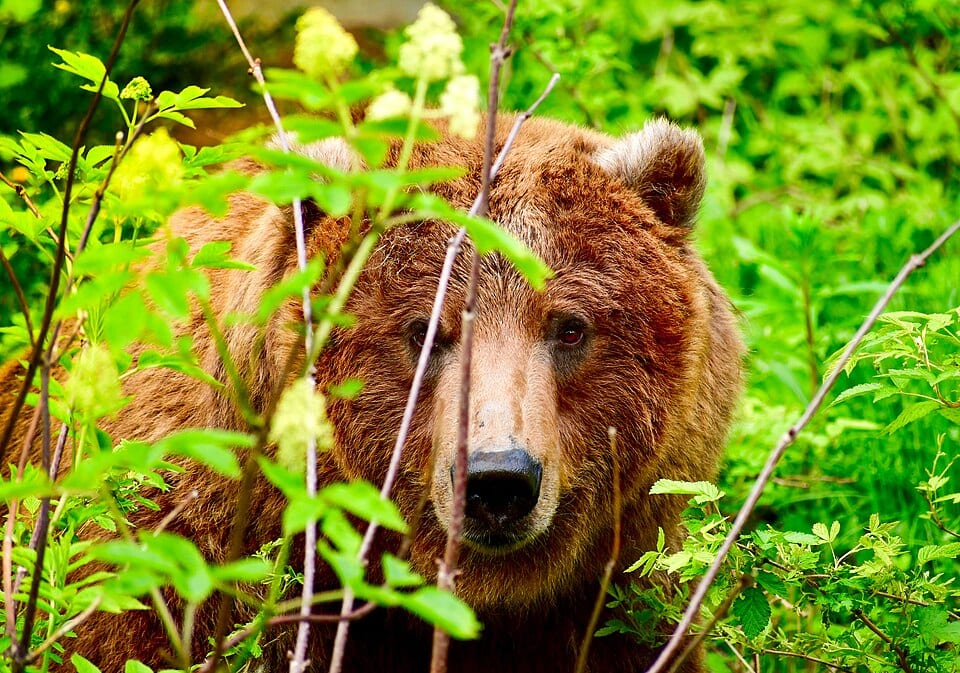
On August 7, 1926, Ojai District Ranger Earl Branson quietly documented an encounter that, by all accounts, should not have happened. Deep in the Santa Barbara National Forest, he came face to face with a California grizzly, an animal widely believed to have disappeared from the region two years earlier. His official report was factual and restrained, but beneath its understated language was the story of an encounter that briefly reopened the question of whether the state’s most legendary predator had truly vanished.
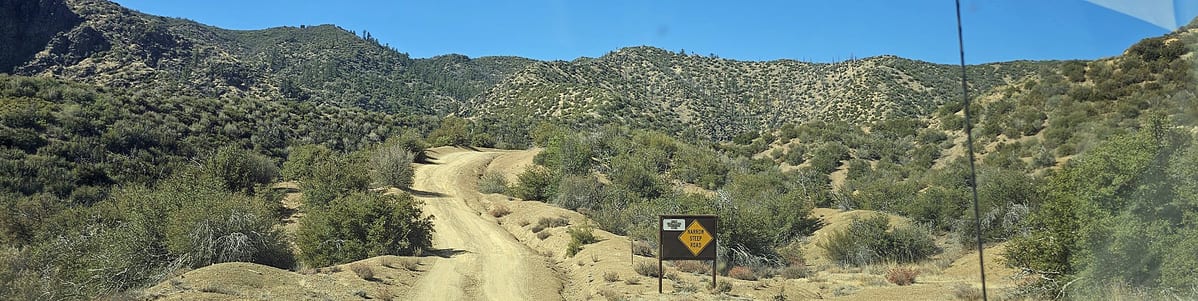
The day before, Branson reached the junction of the Pratt and Gridley trails on Nordhoff Ridge when he suddenly spotted a bear about 100 yards away. It was, he wrote, of “unusually large proportions.” How long the encounter lasted is unknown. Branson’s report offers no estimate whether it was only a few fleeting seconds or several unforgettable minutes. In the dense chaparral that blankets Nordhoff Ridge, with thick stands of manzanita, ceanothus, chamise, and scrub oak; the sighting was most likely fleeting, a giant shape appearing without warning before disappearing just as quickly into the heavy brush.
The official record never says which direction the bear went. Whether it slipped down the steep northern slopes toward the Sespe Wilderness or continued along the exposed, fractured sandstone of Nordhoff Ridge, its path remains uncertain. Forest officials concluded only that the great bear was roaming through the Santa Barbara National Forest.
There is no indication Branson attempted to follow the bear, an animal capable of overpowering a man in an instant. Instead, he did what an experienced forest ranger was trained to do: he carefully examined the place where the bear had been spotted, looking for physical evidence that would confirm what he had just seen.
From Field Report to Front Page
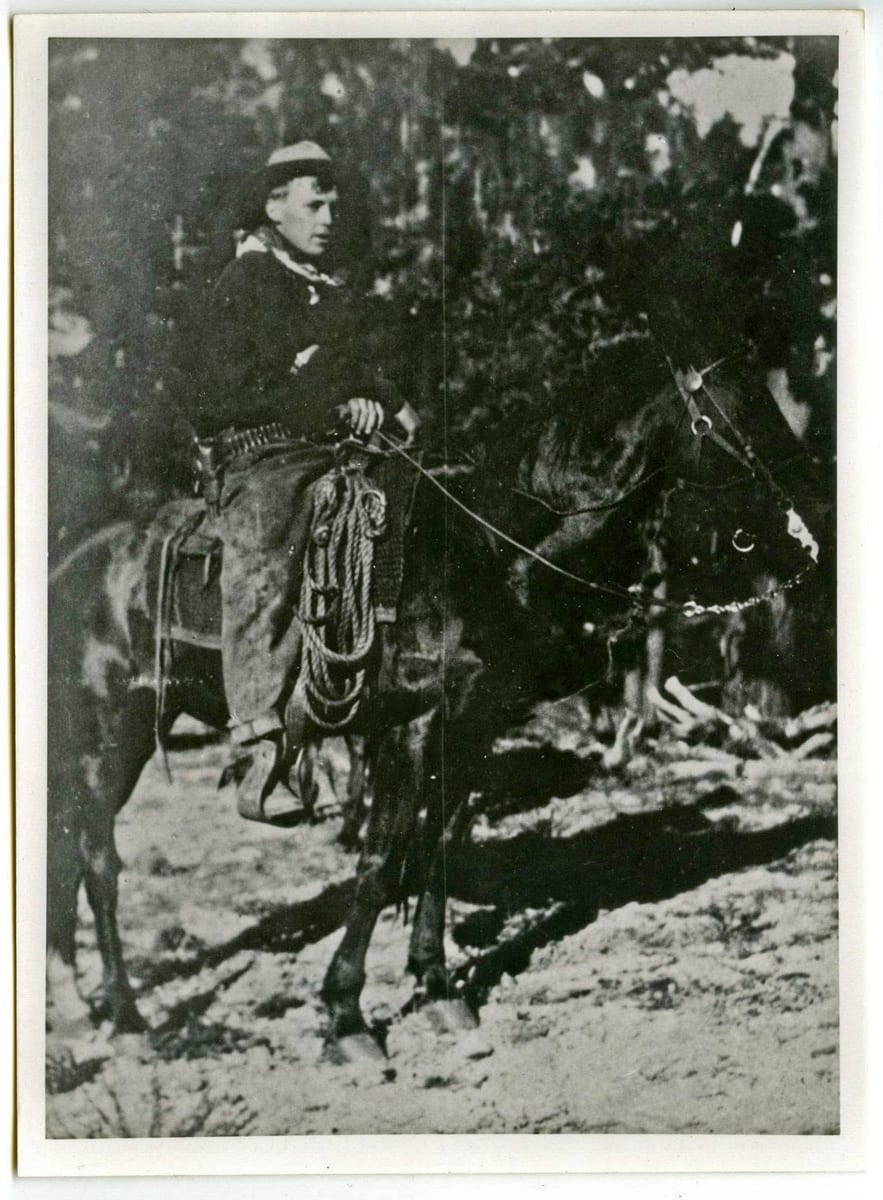
When Ranger Branson filed his report, Forest Supervisor William V. Mendenhall immediately connected it to a series of unusual backcountry reports. Most significant was Branson’s measurement of the massive 10-by-7-inch footprints left in the dirt. Mendenhall recognized that the dimensions matched mysterious tracks found the previous autumn at Don Victor Flats.
That was when two experienced woodsmen, District Ranger Joe Libeu and hunter J. N. Proctor, had independently reported finding identical tracks measuring 10-by-7-inches near Don Victor Flats and Madulce Peak. Libeu, a veteran U.S. Forest Service ranger with extensive experience tracking wildlife, concluded the prints were far too large to have been made by a black bear and identified them as the tracks of a surviving California grizzly.
Convinced the reports described the same animal, Mendenhall took both sightings seriously and issued a press bulletin to regional newspapers, including the Lompoc Review. In explaining his conclusion, he noted that the bear would have traveled more than 20 miles through some of the highest and most rugged terrain in the Santa Barbara National Forest, from Don Victor Flats to Nordhoff Ridge overlooking the Ojai Valley.
The 1925 incident is known today only because Mendenhall referenced it in his 1926 press bulletin. Rather than allowing the field reports to remain buried in government files, he transformed them into a compelling public story. By publicizing the giant tracks and Ranger Branson’s close-range grizzly sighting, Mendenhall did more than share remarkable wildlife news. He showcased the extraordinary wildness and ecological significance of the Santa Barbara National Forest, helping foster public appreciation for a landscape that depended on public and political support for roads, trails, fire protection, and other federal investments.
The Tracks Were Not Enough
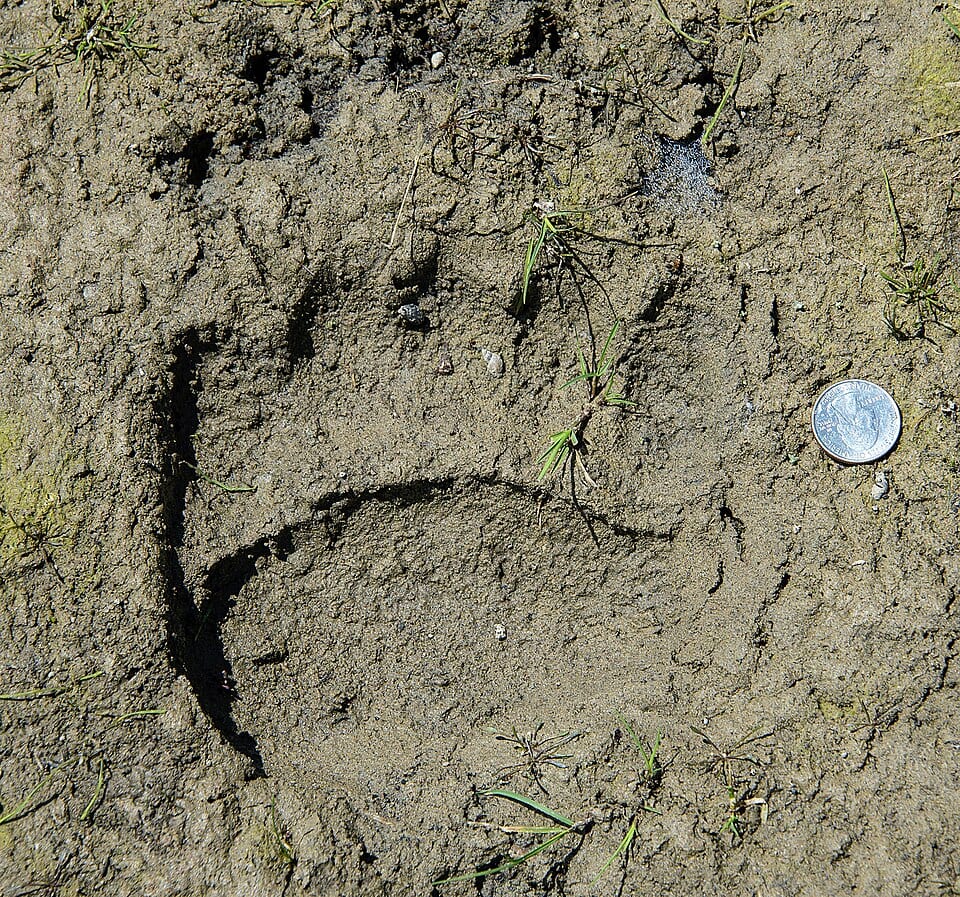
While Mendenhall considered the reports credible, most other Forest Service officials viewed California grizzly identifications based primarily on large tracks with considerable skepticism and believed they almost always resulted from mistaken identification.
That skepticism was expressed publicly in the Santa Barbara News-Press on August 9, 1926. Assistant Forest Supervisor Frank A. Robinson and Ventura County Forester Frank E. Dunne firmly rejected the notion that California grizzlies still inhabited the Santa Barbara National Forest. They stated that the species was extinct in the Coast Ranges and believed it had probably disappeared from the Sierra Nevada as well.
The two men explained that many supposed grizzly sightings originated with unusually large bear tracks. Dunne recalled that he had once been convinced he had found the tracks of a lone grizzly, only to have former Forest Supervisor Chester Jordan demonstrate that, under the right soil conditions, the foot of an ordinary black bear could spread enough to leave a track comparable in size to that of a grizzly. From that experience, Dunne concluded that track size alone was not reliable evidence of a grizzly’s presence.
Robinson estimated that the Santa Barbara National Forest supported only a modest population of about 48 black bears and emphasized that there was no evidence any of them were grizzlies.
The Difference Between Sightings and Proof
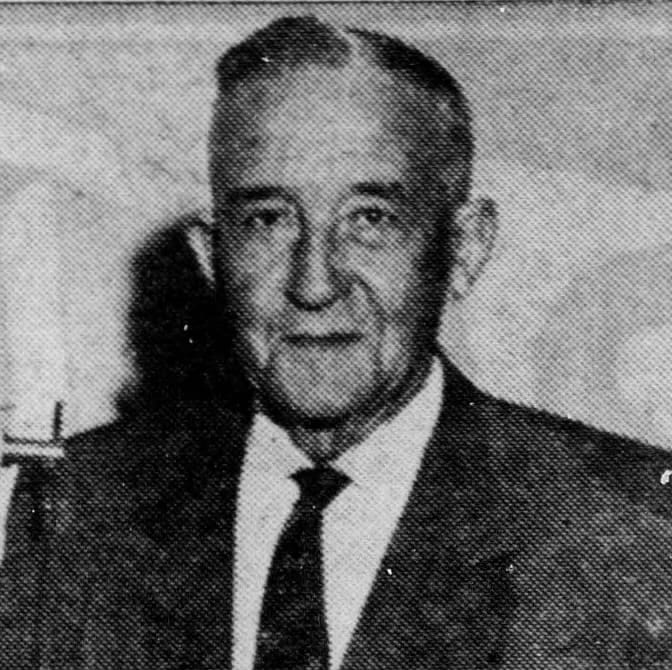
Modern wildlife biologists and historians support the mistaken identity theory and discount the 1925-26 sightings due to a lack of physical proof such as a carcass, hide, skull, or photograph.
An incident in April 1924 at Sequoia National Park remains accepted by the scientific community as the last credible grizzly bear sighting in California. The encounter occurred near Moro Rock, a massive granite dome inside the park. A road crew spotted a massive bear as it emerged from the timber and walked past their camp. The workers filed an immediate, highly detailed report. They specifically noted the animal’s cinnamon-colored fur and a pronounced shoulder hump, the classic physical hallmark of a California grizzly.
Modern scientific institutions like the California Grizzly Alliance draw a sharp distinction between the 1924 road crew report and the 1925-26 Santa Barbara National Forest incidents. The road crew members in Sequoia had previously been stationed in Yellowstone National Park. Because Yellowstone was (and still is) a primary stronghold for wild grizzlies, these men were highly familiar with the species. They knew exactly how to distinguish a grizzly from an American black bear based on behavior, size, and skeletal structure.
While Rangers Branson, Libeu, and Proctor were expert woodsmen, they had spent their lives in Southern California, where wild grizzlies had already plummeted to near extinction by the early 1900s. They lacked the routine, daily exposure to live grizzlies that the Yellowstone-trained crew possessed.
The Sequoia crew observed the bear in a relatively open setting, while the Ojai encounters were only brief glimpses through dense, tangled chaparral. Biologists note that American black bears exhibit a remarkable range of color variations, including brown, cinnamon, and blonde phases that can resemble a grizzly at a distance. An exceptionally large, older black bear moving through heavy brush could easily create the impression of a much larger animal, resulting in an honest but mistaken identification.
The strongest evidence connecting the Don Victor Flats and Pratt-Gridley sightings was the huge footprints. While a track of that size is undeniably impressive, wildlife biologists note that impressions made in mud, loose sand, or decomposed granite can be significantly distorted. A large black bear stepping into soft, shifting soil and “double registering” by placing its hind foot into the impression left by its front foot, can create an oversized track that appears comparable in size to that of a grizzly.
The last widely accepted record of a wild California grizzly came in 1922, when rancher and hunter A. B. Walker shot and killed a grizzly in Tulare County.
Ventura County’s Grizzly Legacy
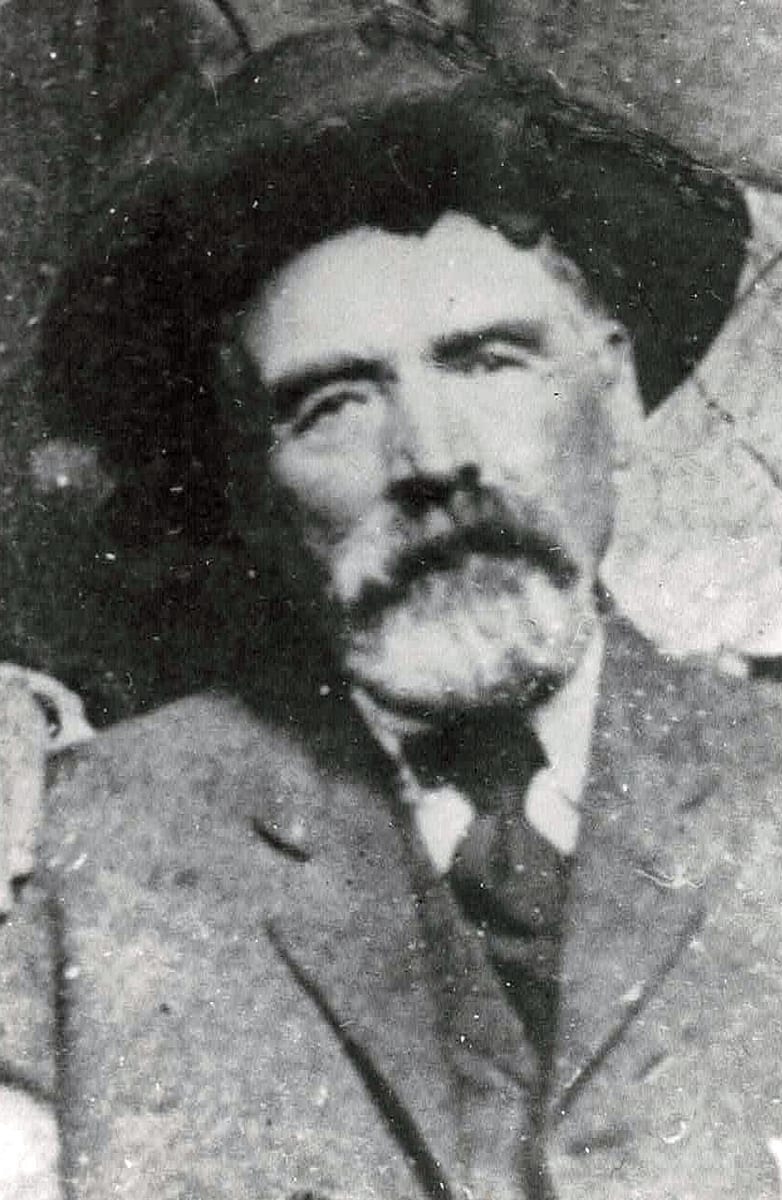
By 1926, most Ventura County residents believed the California grizzly had vanished from the region. That was precisely what made Branson’s report of a possible surviving grizzly so remarkable and why it attracted widespread attention.
In his 1926 History of Ventura County, local historian Sol N. Sheridan devoted considerable attention to the county’s long relationship with the California grizzly. He described the mountains above Ojai and the Matilija country as places where these formidable bears had once been abundant, a landscape where grizzlies had played a prominent role in both natural history and local memory.
Sheridan also preserved the well-known account of veteran vaquero Ramon Ortega, who claimed that during a horseback journey in the late 1800s between Rancho Sespe and the San Buenaventura Mission, he counted an astonishing 107 grizzlies along the route.
Ventura County’s grizzly history is filled with remarkable and sometimes dramatic stories. Around 1873, the Ventura Signal recounted an encounter in which the McCarty family was confronted by a grizzly near Matilija Hot Springs. According to the newspaper account, Mrs. McCarty scrambled into a tree for safety; her husband lifted their infant up to her and then climbed into another tree himself. The family reportedly remained stranded above the ground throughout the night while the bear lingered below. The newspaper later joked that the frightening ordeal had done more for Mrs. McCarty’s health than the hot springs themselves ever could.
Historian Charles Outland documented another unusual chapter in May 1880, when Mrs. Hopper, wife of mountain man Ari Hopper, reportedly shot and killed a grizzly while deer hunting. According to Outland, she remains the only woman in Ventura County history credited with killing a California grizzly.
Grizzlies were not only feared and hunted; they were also eaten. Ventura newspapers reported bear meat being sold in local markets for about 20 cents per pound, and Outland noted that it “sold readily.” During the Gold Rush era, California grizzly meat even appeared on the menus of some hotels.
From Abundance to Extinction
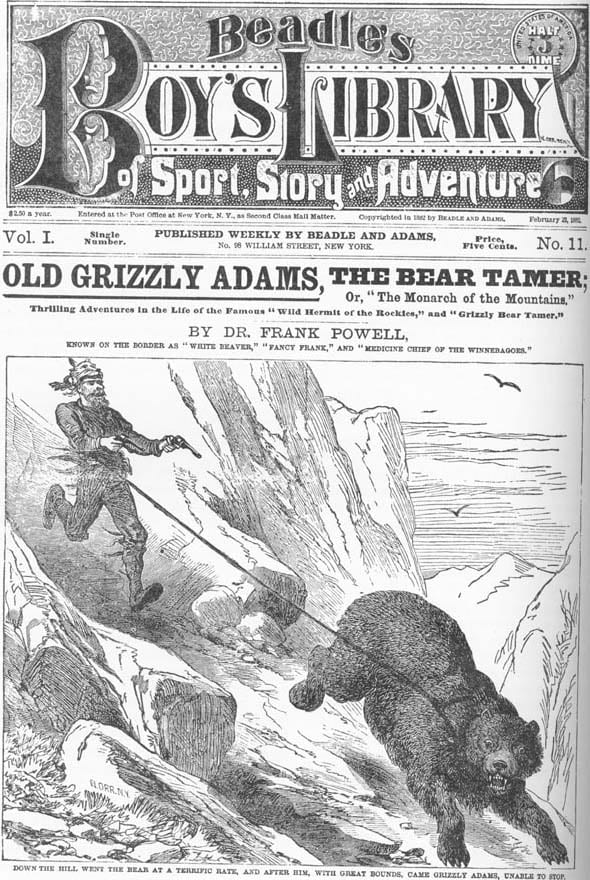
Newspaper accounts reveal both the former abundance of California grizzlies in Ventura County and the speed of their decline. In August 1872, the Ventura Signal reported that grizzlies were “quite too numerous for the safety of man or beast,” although they generally remained within the mountain ranges. In 1875, the newspaper noted that both grizzlies and deer were plentiful around Matilija and reported that fresh grizzly tracks were found almost every morning near Sespe Hot Springs. The Ventura Free Press continued the theme in 1876, describing Ventura County as a hunter’s paradise where grizzlies could still be found in the more remote regions. Later accounts told of bears preying on cattle at Liebre Rancho, killing hogs in Lord Creek Canyon, and attacking sheep near Casitas Pass.
By the mid-1880s, however, newspaper coverage increasingly reflected a changing reality: the grizzly was becoming a vanishing presence. In 1886, the Ventura Free Press observed that only an occasional grizzly or “cinnamon bear” was still being seen. The clearest indication of the species’ decline appeared in the Ventura Democrat on January 20, 1887, which noted that grizzlies, once “the scourge of livestock, and a menace even to man himself,” were now encountered only rarely. The newspaper attributed their disappearance to relentless hunting and poisoning, predicting that they would “soon have become extinct.” That prediction proved remarkably accurate.
How California Lost Its Grizzly
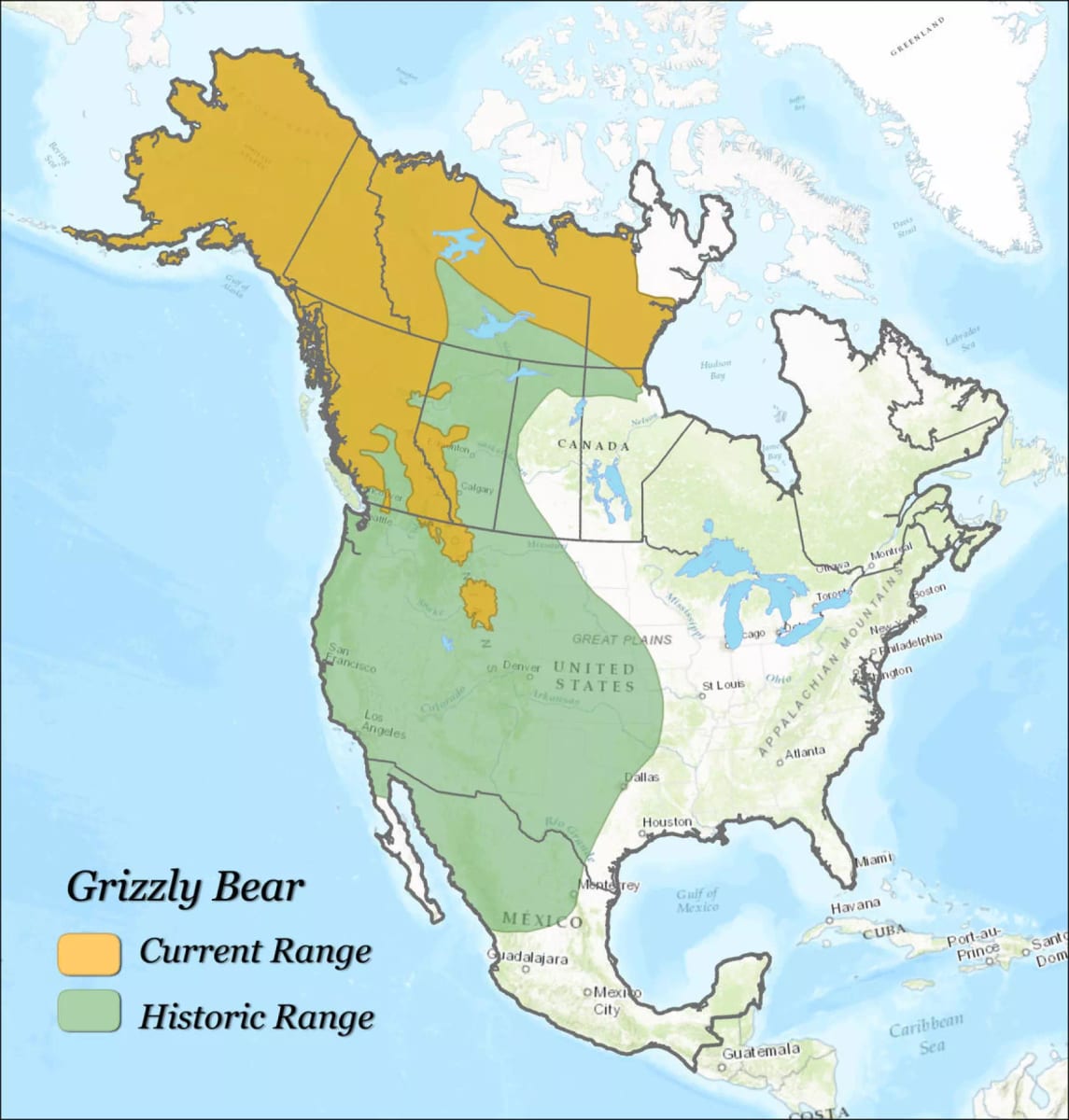
Before statehood, California supported one of the largest grizzly bear populations in North America. Estimates suggest that somewhere between 10,000 and 20,000 grizzlies inhabited the state, ranging from coastal regions and inland valleys to the mountain ranges, including the valleys and rugged backcountry of Ventura County. Yet within roughly 75 years of California becoming a state, this abundant apex predator disappeared from the wild. The grizzly’s extinction was not the result of a single event, but of several forces working together. The most significant was direct persecution by humans. As ranching expanded across California, grizzlies came to be viewed as dangerous predators that threatened livestock, horses, ranch workers, and settlers. Bears were routinely shot, trapped, and poisoned, while counties and livestock owners offered bounties for their removal. Organized campaigns formed to track down and eliminate grizzlies that killed cattle or sheep.
At the same time, grizzlies were losing the very landscapes that had sustained them for centuries. Grasslands were converted to farms, oak woodlands were cleared, wetlands were drained, and expanding towns, roads, and railroads fragmented their habitat. The California Gold Rush accelerated these changes at an unprecedented pace. In just a few years, the state’s non-Indigenous population grew from only a few thousand people to hundreds of thousands. More settlers brought more livestock, more hunting, more development, and more frequent conflicts with bears. The changing landscape also diminished the grizzlies’ natural food sources. Although they were highly adaptable omnivores that ate acorns, berries, roots, insects, deer, and carrion, many of these resources became less reliable as habitats were altered and wildlife populations declined. As their traditional feeding areas disappeared, grizzlies increasingly came into conflict with humans. Unlike black bears, grizzlies were unable to recover from these pressures once their numbers began to collapse. Females produce only one to three cubs every few years and do not begin breeding until several years of age. With adult bears being killed faster than populations could replace themselves, their numbers steadily declined. The American black bear survived partly because it was better suited to the changing environment. Smaller, more elusive, and generally less likely to come into conflict with people and livestock; black bears retreated into remote forests and rugged mountains. California grizzlies, by contrast, had long depended on the productive valleys, foothills, and open landscapes that were among the first areas transformed by agriculture and settlement.
By the early twentieth century, only a few remote mountain regions seemed remotely capable of sheltering the last surviving California grizzlies. Among them were the rugged Sespe backcountry, the Madulce area, the upper Santa Ynez Mountains, and portions of the southern Sierra Nevada.
The Ojai Grizzly Who Became a Legend
Ventura County shares another remarkable historical connection to the story of California’s last wild grizzly captured alive. Known as “Monarch,” the bear was trapped in the Ojai Valley in 1889 by a crew hired by newspaper publisher William Randolph Hearst. The newspaper tycoon wanted a live California grizzly as a publicity attraction for his paper, the San Francisco Examiner. Capturing the enormous 1,100-pound animal proved to be a formidable task, requiring several months of effort by experienced woodsmen using a specialized steel trap and heavy chains.
In a 1982 oral history interview recorded by the Museum of Ventura County, Ralph H. Bennett recalled a story told to him by Al Drown, proprietor of the Davis & Drown livery stable in Santa Paula. According to Bennett, Hearst visited Drown and hired horses and several local cowboys for an expedition into the Sespe backcountry to help capture the grizzly. Bennett remembered Drown laughing about the bill from the expedition: “We charged him three times as much as we should have charged him, but we thought if he didn’t pay, we could always cut down to a little less.” Drown added, “He paid the whole darned bill and didn’t question it.”
After the capture, Hearst transported the bear by train to San Francisco and named him Monarch, taking the name from the San Francisco Examiner’s slogan, “The Monarch of the Dailies.” More than 20,000 people came to see the bear on his first day of public display. Monarch spent the next 22 years in captivity, first at Woodward’s Gardens and later as the star attraction at the Golden Gate Park Menagerie.
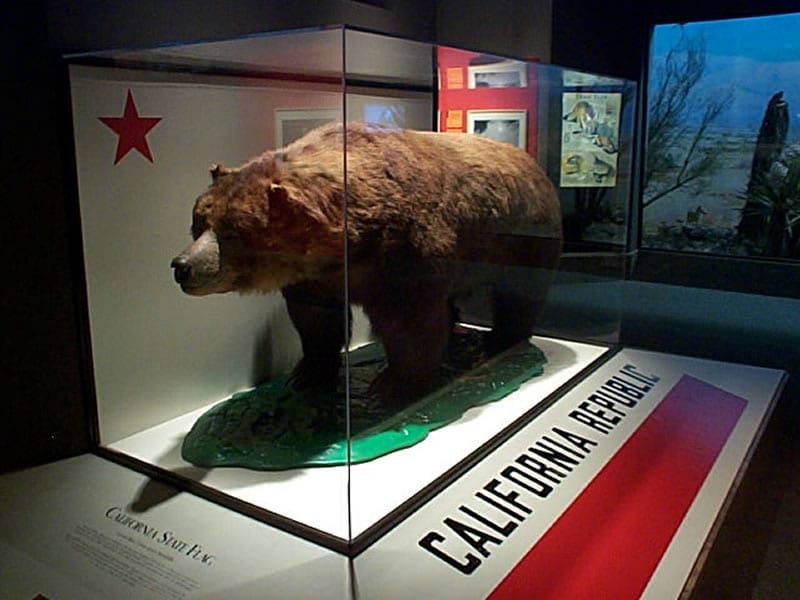
In 1911, artist Guy Fageollet used Monarch as the anatomical model for a new design of the California Bear Flag. Monarch died in May 1911 after years of declining health. His hide was preserved through taxidermy, and his mounted remains are now part of the collection of the California Academy of Sciences in San Francisco.
The Same Mountains, A Different Future
A century after the last reported grizzly sightings in Ventura County, the possibility of the bear’s return has become the subject of active debate in California.
In 2026, the California Legislature began considering Senate Bill 1305, the California Grizzly Recovery Assessment Act. The bill does not authorize the immediate release of grizzly bears. Instead, it directs the California Department of Fish and Wildlife to conduct a comprehensive scientific assessment examining whether reintroduction is feasible, where it could occur, and what the potential ecological, social, and economic impacts would be. If approved, the department would be required to report its findings to the Legislature by June 30, 2030. The measure passed the State Senate by a 29–9 vote in May 2026 and continued advancing through the State Assembly, though it had not yet become law.
A landmark study published by the California Grizzly Alliance concluded that California’s remaining wilderness could potentially support an estimated population of 1,200 grizzly bears without causing major ecological strain.
Ventura County figures prominently in that discussion. Wildlife biologists have long identified the Sespe Wilderness and surrounding backcountry of the Los Padres National Forest as one of the few remaining landscapes in California large and wild enough to potentially support grizzlies. The Grizzly Alliance study identified the Sespe region as one of only three areas in the state with the space, food resources, and relatively intact habitat necessary to sustain a restored population. Its rugged chaparral-covered mountains, seasonal streams, and extensive oak woodlands closely resemble the environments that once supported California’s native grizzlies.
Supporters emphasize that any return of the grizzly remains a research question, not an immediate plan for releasing bears. They note that no reintroduction could occur unless scientific studies demonstrate feasibility, local communities are consulted, and the Legislature provides authorization and funding. Among the leading voices is Dr. Peter Alagona of UC Santa Barbara, who has emphasized that the legislation would create a scientific roadmap, not a mandate to bring back the bear.
The proposal has also drawn strong opposition. Ranchers and agricultural organizations have raised concerns about livestock losses, while many hikers, hunters, and rural residents question whether grizzlies could safely coexist within a state of nearly 40 million people. Critics note that the rugged mountains of northern Ventura County connect directly to populated valleys and the Interstate 5 corridor, raising concerns that future bears could eventually wander into communities such as Ojai or Fillmore in search of food. Another challenge would be obtaining grizzlies from other western states, where existing populations are carefully managed and highly valued.
Whether California grizzlies ever return remains uncertain. But if they do, the same rugged Ventura County backcountry where Rangers Libeu and Branson once followed enormous tracks and reported possible sightings could once again become part of the range of the animal that helped define California’s wilderness.
Make History!
Support The Museum of Ventura County!
Membership
Join the Museum and you, your family, and guests will enjoy all the special benefits that make being a member of the Museum of Ventura County so worthwhile.
Support
Your donation will help support our online initiatives, keep exhibitions open and evolving, protect collections, and support education programs.
Bibliography
- @weekendsherpa. “Monarch the Grizzly Returns.” Very Local Outdoors. Accessed July 22, 2026. https://www.weekendsherpa.com/stories/see-californias-last-grizzly-bear-at-california-academy-of-sciences/.
- “Alltrails.com.” AllTrails: Trail Guides & Maps for Hiking, Camping, and Running | AllTrails. Accessed July 22, 2026. https://www.alltrails.com/trail/us/california/shelf-gridley-fuel-break-and-pratt-trails-loop.
- Benntt, Ralph H. Oral history interview with Ralph H. Bennett. Museum of Ventura County. 1982.
- “California Senate Declares ‘Year of the California Grizzly Bear’.” Center for Biological Diversity. Last modified April 8, 2024. https://biologicaldiversity.org/w/news/press-releases/california-senate-declares-year-of-the-california-grizzly-bear-2024-04-08/.
- “Discover History.” Forest Service. Last modified March 24, 2025. https://www.fs.usda.gov/r05/lospadres/recreation/discover-history.
- “Don Victor Camp.” Hiking Trails, Backpacking Trails and Camping in the Los Padres National Forest. Last modified February 24, 2015. https://www.hikelospadres.com/don-victor-campground.html.
- “Frontier Myth Vilified the California Grizzly.” The Washington Post. Last modified April 25, 2024. https://www.washingtonpost.com/science/2024/04/25/california-grizzly-bear-extinct-reintroduce/.
- “Grin and Bear It: Grizzly Stories from Ventura County’s Past.” Vcstar.com. Accessed July 22, 2026. https://archive.vcstar.com/news/special/outdoors/grin-and-bear-it-grizzly-stories-from-ventura-countys-past-ep-642116873-351219651.html#:~:text=Local%20historian%20Sol%20Sheridan%2C%20in,races%20of%20gigantic%20animal%20life.%E2%80%9D.
- “Grizzly Bears – Jack Elliott’s Santa Barbara Adventure.” Jack Elliott’s Santa Barbara Adventure. Accessed July 22, 2026. https://yankeebarbareno.com/tag/grizzly-bears/.
- “John “Grizzly” Adams.” Wikipedia, the Free Encyclopedia. Last modified July 20, 2026. https://en.wikipedia.org/wiki/John_%22Grizzly%22_Adams.
- “Last California Grizzlies Seen In Santa Barbara National Forest? (1926).” Jack Elliott’s Santa Barbara Adventure. Last modified May 23, 2025. https://yankeebarbareno.com/2025/05/23/last-california-grizzly-seen-in-santa-barbara-ventura-1926/.
- “Last Known Grizzly Bear in Los Angeles County, California.” Accessed July 22, 2026. https://www.laalmanac.com/environment/ev15.php#google_vignette.
- Lompoc Review. “Ranger Sees Big Grizzly in South.” August 10, 1926.
- “Los Padres National Forest.” Los Padres National Forest. Accessed July 22, 2026. https://www.fs.usda.gov/r05/lospadres.
- The Morning Press (Santa Barbara). “Big Grizzly Seen in Hills Around Ojai.” August 8, 1926, 1.
- “Nordhoff Peak Via Pratt Trail.” GaiaGPS.com. Accessed July 22, 2026. https://www.gaiagps.com/hike/224179/nordhoff-peak-via-pratt-trail/.
- “Nordhoff Ridge and Rose Valley Area North of Ojai Trail Map and Descriptions.” Ventura County Trails. Accessed July 22, 2026. https://www.venturacountytrails.org/TrailMaps/OjaiGridley/AreaTrails.htm.
- “Pratt and Gridley Trail Loop.” Moments in Dirt and Ink. Last modified June 11, 2013. https://valhikes.blogspot.com/2013/06/pratt-and-gridley-trail-loop.html.
- “The Real Story of Monarch the Bear, San Francisco’s Sad, Famous Grizzly.” San Francisco Chronicle. Accessed July 22, 2026. https://www.sfchronicle.com/totalsf/article/california-flag-bear-monarch-19456142.php.
- “Recovering Grizzly Bears in California.” CA Grizzly Alliance. Last modified April 15, 2025. https://www.calgrizzly.org/feasibility-study.
- Santa Barbara News-Press. “No Grizzlies in Mountains Say Foresters.” August 9, 1926, 12.
- “Santa Barbara – Page 2 – Jack Elliott’s Santa Barbara Adventure.” Jack Elliott’s Santa Barbara Adventure. Accessed July 22, 2026. https://yankeebarbareno.com/category/santa-barbara/page/2/.
- Sheridan, Sol N. History of Ventura County, California. Chicago: Clark Publishing, 1926.
- Ventura Democrat. “Grizzlies Rapidly Disappearing.” January 20, 1887.
- Ventura Free Press. “Grizzlies Killing Hogs Lord Creek Canyon.” January 23, 1885, 4.
- Ventura Free Press. “Resources of Ventura County.” June 11, 1886, 2.
- Ventura Free Press. “Ventura County, A Hunter’s Paradise.” November 18, 1876, 1.
- Ventura Free Press. “Grizzly Kills Three Sheep on Casitas Pass.” April 23, 1887, 3.
- Ventura Signal. “Fresh Grizzly Bear Tracks at Sespe Hot Springs.” August 14, 1875, 1.
- Ventura Signal. “Grizzlies on the Liebre Rancho.” April 26, 1879, 3.
- Ventura Signal. “Grizzly Bear and Deer Abound Near Matilija.” January 2, 1875, 4.
- Ventura Signal. “The Grizzly Bear is Too Numerous for Safety.” August 3, 1872, 2.
- “Wildlife – Jack Elliott’s Santa Barbara Adventure.” Jack Elliott’s Santa Barbara Adventure. Accessed July 22, 2026. https://yankeebarbareno.com/tag/wildlife/.