by Library Docent Volunteer Andy Ludlum
Moorpark had gone all out for Ventura’s massive 1926 Fourth of July parade. A Moorpark Enterprise columnist sat in an open touring car decorated with flags, bunting, and flowers. Two large signs in red, blue, and black lettering read: “California Apricot Exhibit,” “June 21–24,” and “Moorpark, the Home of the Apricot.” The columnist called the experience “astonishing and nearly unbelievable” and joked: “Never saw so many people before in all my life, and so many people never saw me before. Oft times I have done things to show myself off as a prune, they say, but Monday was the only time I have ever had the opportunity of trying to be an apricot.” When parade watchers shouted, “Where are the apricots?” he replied that, “Moorpark apricots are too valuable to be carried about in an open touring car without armed guard.”
While the newspaper writer complimented the publicity committee for the town’s parade entry, he poked fun at a banner they’d stretched across Los Angeles Avenue, saying it leaned at “a terrifying list to port.” He joked that if any more car crashes happened at that corner, it would be because drivers mistook the crooked banner for the horizon, throwing off their balance and nearly wrenching their necks trying to read it.
These remarks appeared in the “Around the Village” column in the Enterprise, a local news section that shared everyday happenings in and around town. These columns were usually written by editors or community members and were often unsigned or published under a pseudonym. This column was signed “The Extinguisher, Chief I. G.” Most likely, “Chief I. G.” was Ira G. Tanner. Tanner owned and operated Mission Automotive Garage in Moorpark and helped organize the town’s volunteer fire protection in 1921 and served as volunteer Fire Chief.
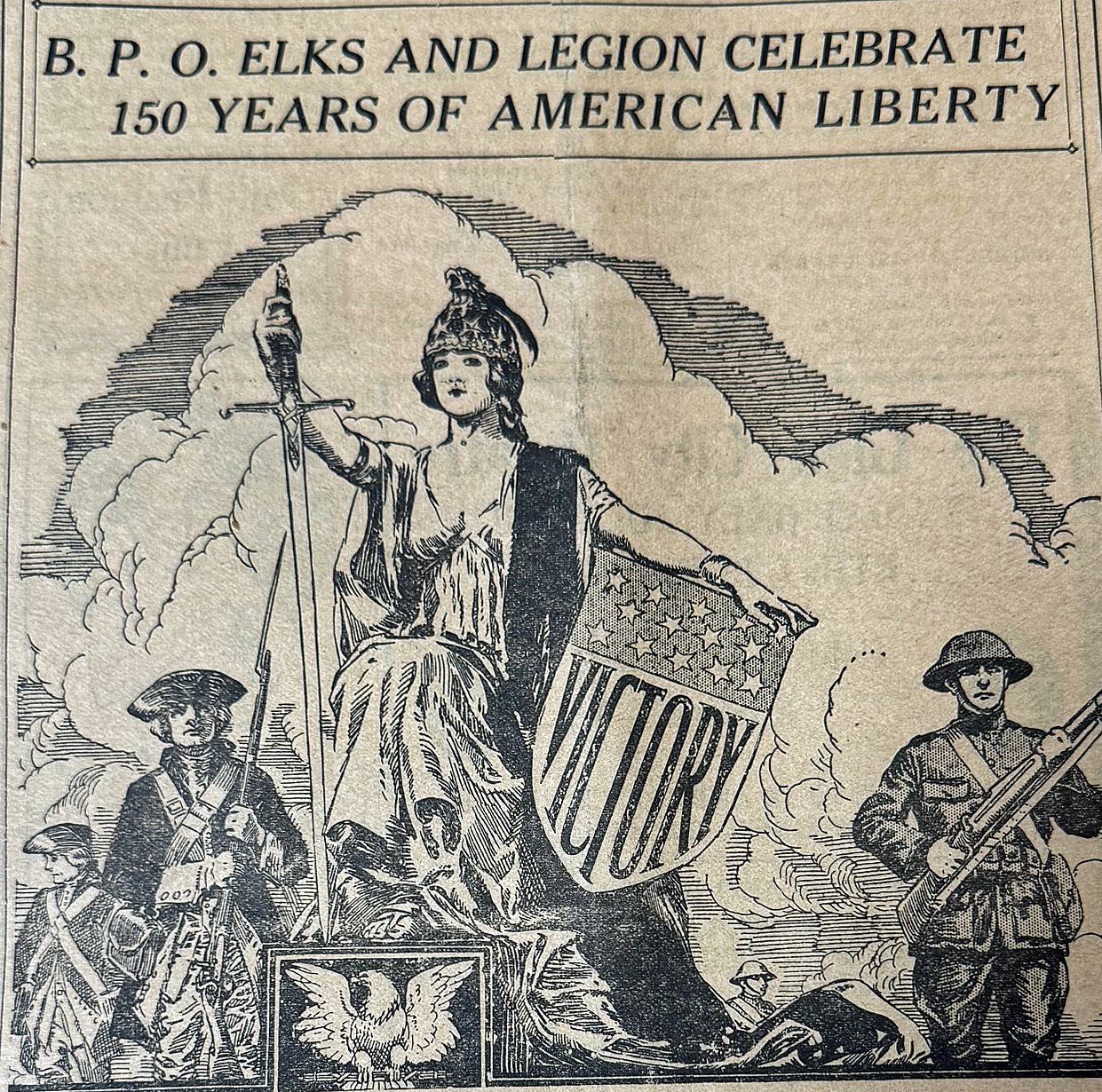
Ventura’s celebration marked the nation’s Sesquicentennial, the 150th anniversary of the Declaration of Independence. It was the largest and most dramatic patriotic event Ventura had ever staged and remains a landmark civic occasion to this day.
A Modern Celebration for a Growing City
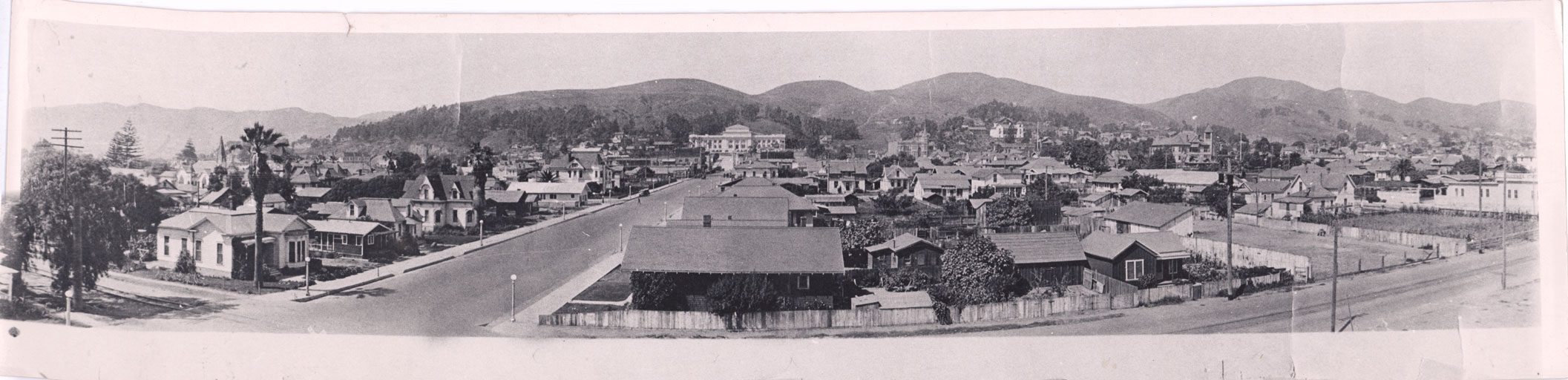
Town parades in the early 20th century often featured prominent community leaders such as fire chiefs, business owners, and civic officials on floats or in marching units, especially for Independence Day celebrations. The 1926 Sesquicentennial celebration was a perfect chance for Ventura to show its patriotism and to highlight the oil and citrus industries that were bringing new wealth to the area.
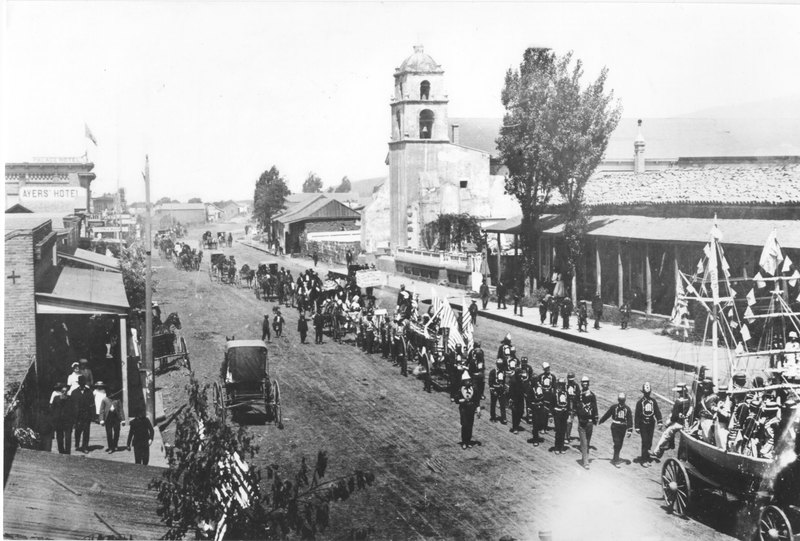
At the previous national milestone, the 1876 Centennial, Ventura was still a small pioneer town of about 1,000 people. Ventura County had existed for only three years and had a population of about 8,500.
Fifty years later, during the Ventura Avenue oil boom and the rapid growth of the citrus industry, everything had changed. The city’s population had multiplied more than eight times, and the county had grown to 45,000 residents. For 1926, community leaders planned a loud, fast, modern three-day celebration.
National Celebration in Philadelphia
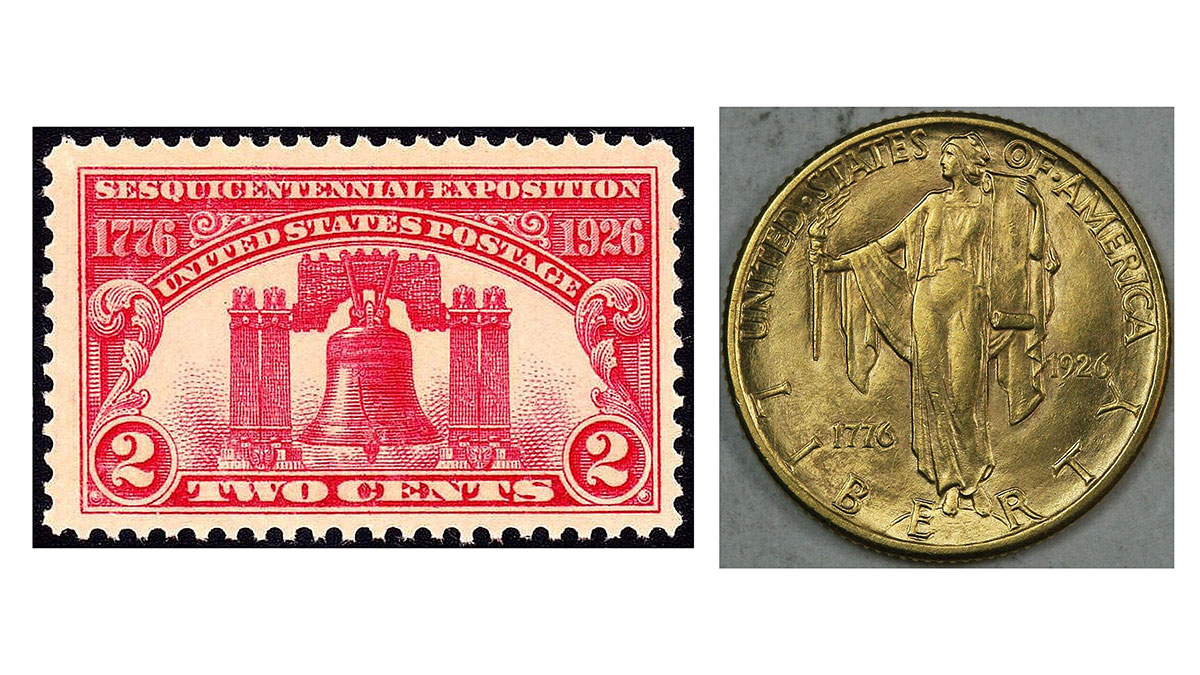
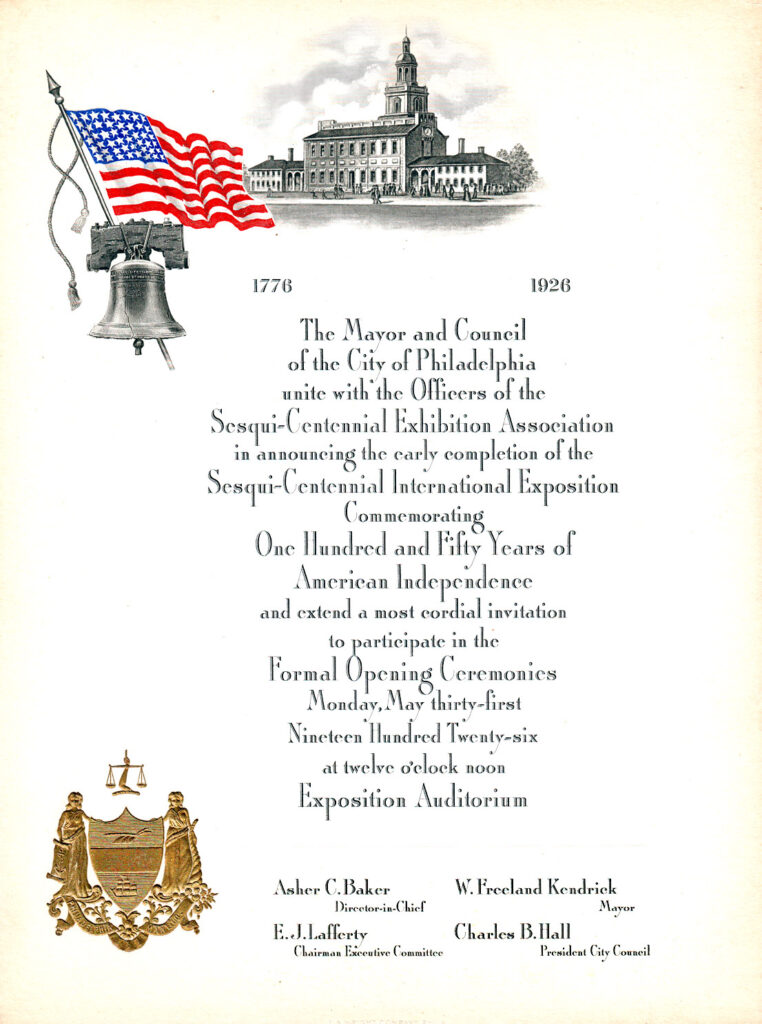
At the end of May 1926, the Sesquicentennial International Exposition opened in Philadelphia. The six-month World’s Fair featured patriotic celebrations, large exhibition halls and displays of modern technology that was only beginning to appear in Ventura County. Visitors could tour fully electrified “modern homes” equipped with refrigerators, washing machines, electric ranges, and bright built-in lighting. Automobile exhibits showcased the new luxury closed-body cars with more powerful engines and better brakes. The Oxnard Press-Courier praised the exposition as “a good, big show” that “unquestionably deserves the patronage of the nation,” and predicted that Philadelphia would be the summer’s top tourist destination. The opportunity wasn’t missed by the Union Pacific Railroad, which by mid-June advertised a special round-trip fare of $134.50 from Los Angeles to Philadelphia.
By early June, plans were coming together for Ventura’s Sesquicentennial celebration, sponsored by the American Legion and the Elks Club. Committee members met at the Pioneer Museum at the courthouse and announced the event would take place July 3rd, 4th and 5th. Because the Fourth fell on a Sunday, major events like the parade were scheduled for Monday, July 5th. County Assessor Jasper Barry told the Morning Free Press that organizers were preparing equipment for what he called a “mammoth celebration.”
Oxnard began celebrating a little earlier with a strong show of patriotism on Flag Day, June 14th. The Oxnard Press-Courier described scores of American flags flying from “practically every pole in the city” to mark the 149th anniversary of the Stars and Stripes.
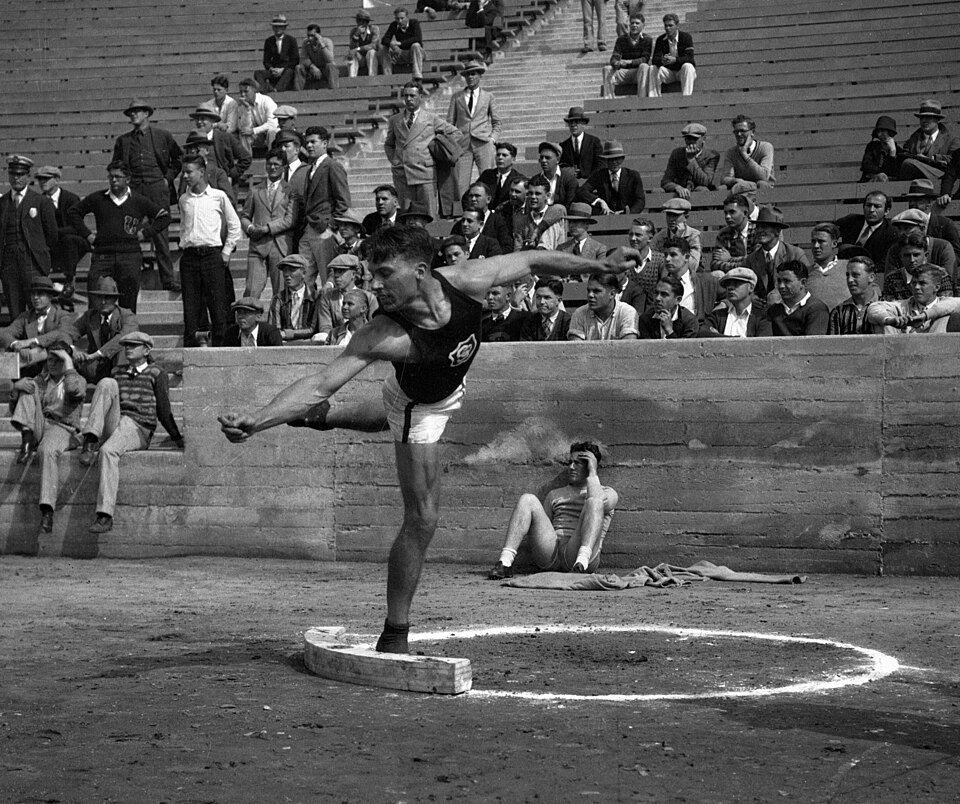
Oxnard received good news when residents learned that the city’s most celebrated athlete, two-time Olympic champion Bud Houser, had completed his state dental examinations ahead of schedule and was able to board the eastbound train for the A.A.U. Senior Championships, to be held July 5th at the Sesquicentennial Exposition in Philadelphia. For a time, it had been feared he would miss the connection. His sponsor, the Hollywood Athletic Club, even stood ready to fly him from Sacramento to Salt Lake City, so he might intercept the train and continue to the national competition.
The USS Idaho Comes to Ventura
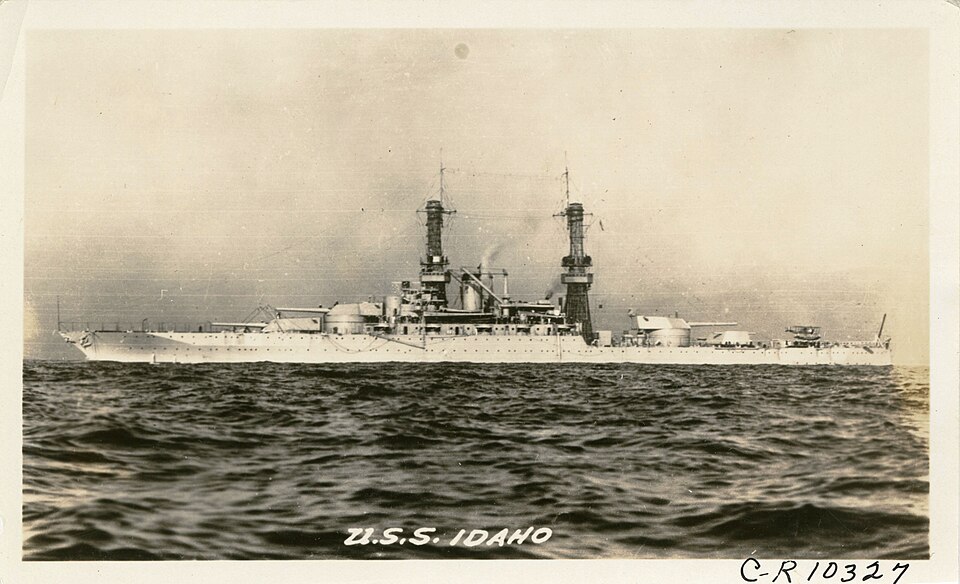
At the end of June, the centerpiece of Ventura’s Sesquicentennial celebration dropped anchor offshore: the battleship USS Idaho. As part of a long Navy tradition of goodwill visits and patriotic displays, one of the largest ships in the American fleet was sent to Ventura. The ship was commanded by Capt. Arthur St. Clair Smith, Jr. During the celebration, the Idaho was open to visitors each day and at night she was lit up with a dramatic searchlight display.
During her weeklong visit, the great battleship and her crew became fully woven into Ventura’s Fourth of July festivities. City leaders arranged diversions for the sailors: country clubs opened their golf courses to the officers, while baseball games, boxing at El Rio, dances, and band concerts complemented the customary parade, patriotic exercises, and fireworks. The Morning Free Press even reported that officers and enlisted men were invited to attend the Ninety and Nine Men’s Bible Class at the First Christian Church on Sunday morning. Some sailors eagerly exchanged sea for shore. On June 30th, ten sailors secured seventy-two-hour leaves, hired a truck, and departed for Foster Park, where they camped in the hills to “try their sea-legs” on dry land. Neighboring towns joined in the welcome. Fillmore sent formal greetings to the Idaho’s officers and men, published in a special page of the Free Press and signed by patriotic local businessmen.
Opening the Ship to the Public
Through arrangements made by County Assessor Jasper Barry, chairman of the naval festivities, the ship’s commander invited Ventura’s Girl Scouts to tour the super-dreadnaught, with sailors detailed to escort them over the vessel.
The most coveted social event came on the evening of July 2nd, when Captain Smith and his officers hosted one hundred Ventura County couples at a formal dance upon the quarterdeck. Beneath a vast awning and festooned with signal flags, the deck was polished, and its brass railings shined in the electric light. Music was provided by the ship’s eight-piece orchestra, and light refreshments were served. Though many sought invitations, Captain Smith regretfully noted that only a limited number could be accommodated, as the officers’ boats were tasked with bringing the guests safely back to shore at evening’s end.
Public excursions to the battleship were conducted daily from 10 a.m. to 5 p.m. throughout the three-day celebration. The only restriction placed upon visitors was a prohibition against photography, in keeping with naval regulations. Although the Idaho ordinarily carried two floatplanes, they were not aboard during her Ventura visit. Guests were nevertheless shown the ship’s black-powder-powered catapult, a 65-foot track capable of hurling an aircraft forward at speeds of up to 60 miles per hour. Because the planes were seaplanes, they did not return to the deck after a flight. Instead, upon completing their scouting missions, the pilots landed on the open sea, usually in the calm “slick” created when the battleship turned to smooth the water. A crane then hoisted the aircraft safely back aboard.
Getting the City Ready
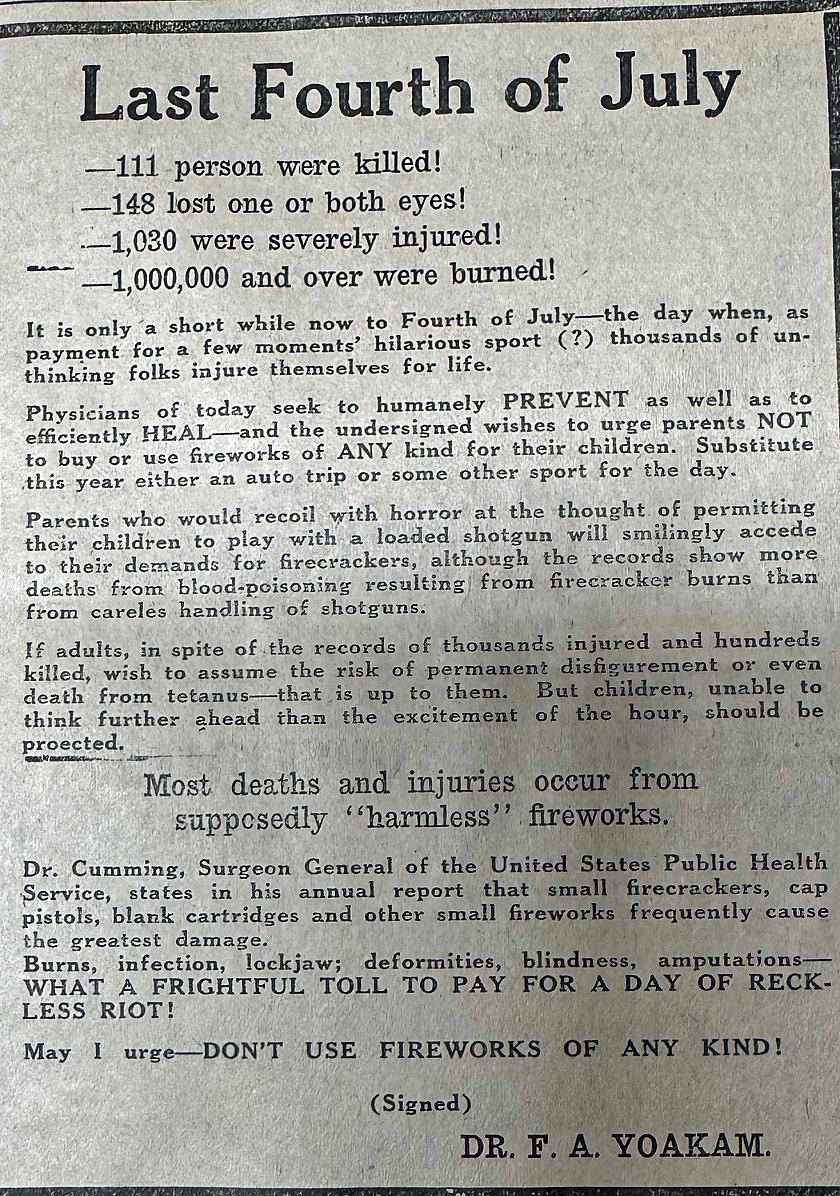
As Ventura’s great celebration approached, the city street department kept crews at work for several days, determined to present the town as “spick and span” to its Fourth of July visitors. The Ventura County Star reported that City Marshal E. T. Mosher warned that those who failed to help keep the streets clean would face Judge Thomas Meilandt on misdemeanor charges. “Some merchants have been in the habit of sweeping their street fronts and store litter out into the gutter. It has got to stop right now,” Mosher declared. “Some residence owners have thrown lawn clippings, paper and other debris into their curbs. They, too, must mend their ways. If they don’t, we will have to give them a summons to tell the judge about it.” In neighboring Santa Paula, City Marshal Lee Sheppard reminded citizens that fireworks were prohibited within city limits except during the twenty-four hours of the Fourth of July. The ordinance, adopted for fire protection, he promised, would be “rigidly enforced.”
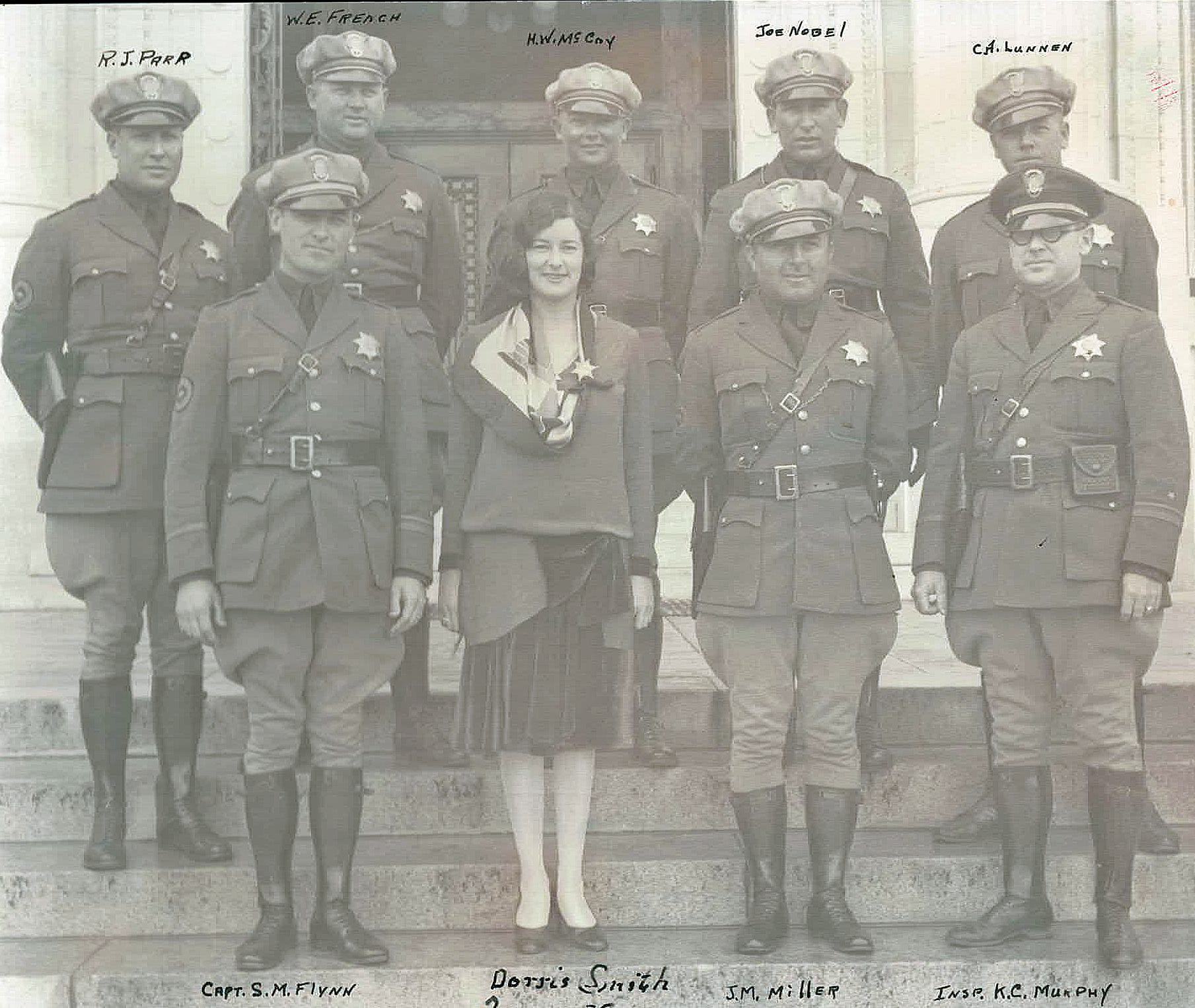
The greatest logistical undertaking of the celebration was Monday’s parade, proclaimed as the largest ever staged in Ventura. Main Street was closed from 7:00 a.m. until the parade’s conclusion to all but through-town traffic. Harle Walker, chairman of the policing committee, joined Captain K. C. Murphy of the State Traffic Squad and City Marshal Mosher in announcing that motorists entering the city would be met at Fir and Olive Streets. Those needing oil or gasoline would be allowed access to Main Street up to half an hour before the parade began. The closure extended from Fir to Olive Streets, with two officers stationed at each corner to prevent unauthorized traffic. Two inspectors arrived from Los Angeles to assist Captain Murphy in maintaining order.
Three Day Celebration Begins
The long-anticipated celebration opened on Saturday morning, July 3rd with trips to the battleship. Visitors could also take “speed boat excursions” around the harbor and circle the Idaho. These fast “thrill rides” were offered in sleek, mahogany-hulled runabouts powered by converted aircraft or automobile engines. The rides were noisy, exciting, and bumpy. Tickets cost as little as 50 cents.
In 1926, Ventura did not yet have a formal municipal airport. Instead, planes used rustic, unpaved landing strips in open agricultural areas, including Ventura Flying Field near Pierpont Beach. For eight hours on Saturday and again on Monday, aviators thrilled crowds with stunts; loop-the-loops, barrel rolls, spins, steep dives, and low passes over the field.
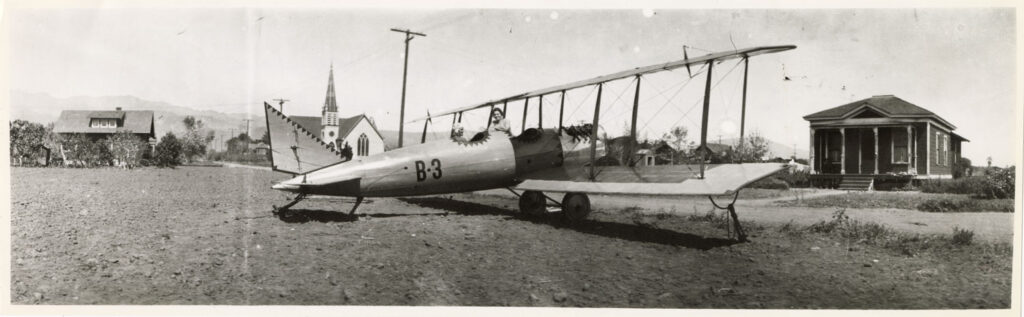
For many in Ventura County, it was their first close-up look at an airplane in action. Those who wanted more excitement could pay a few dollars for a short ride in an open-cockpit plane, obtained by the America Legion for the celebration. These flights included only gentle maneuvers, not aerobatics.
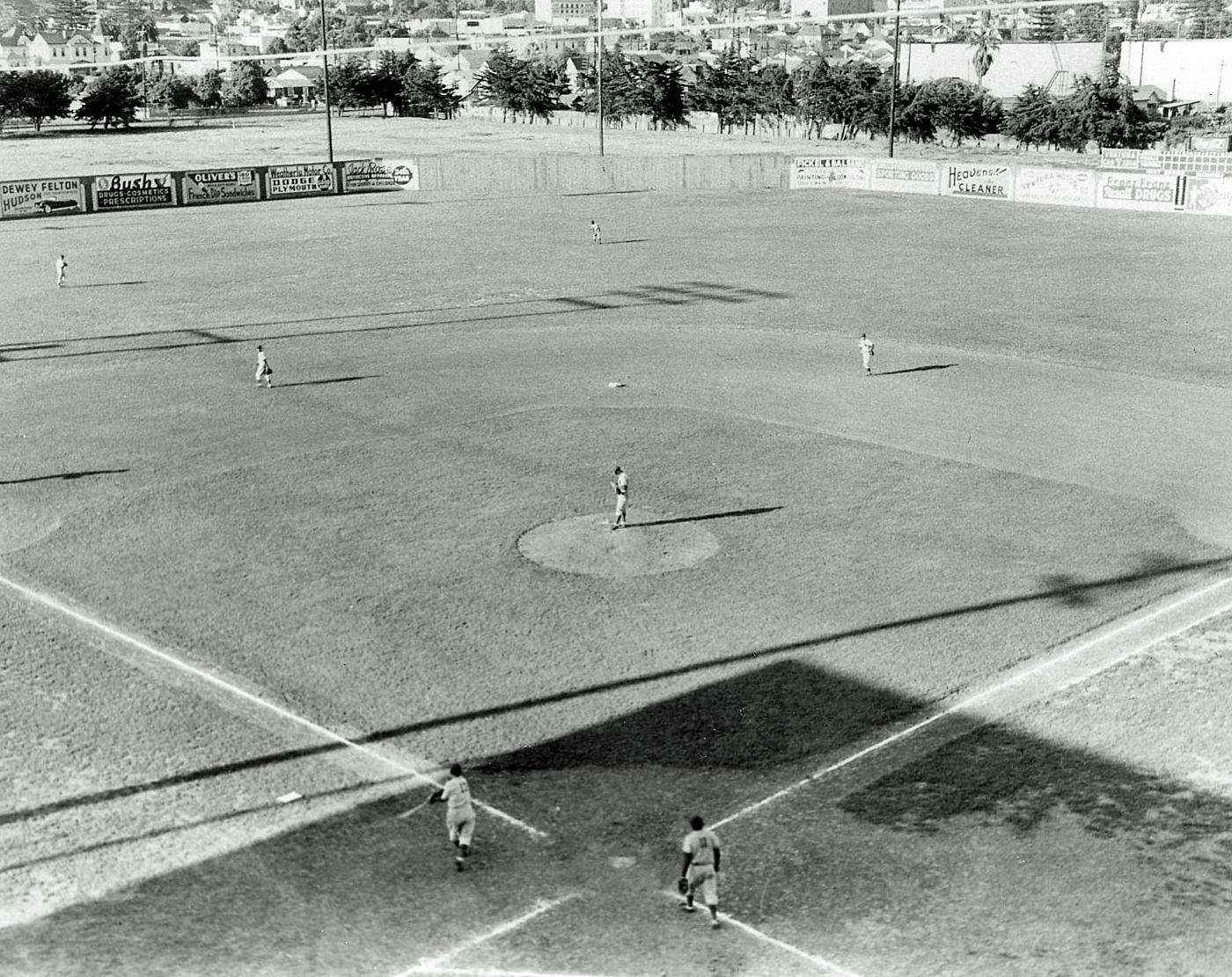
Concessions opened along California Street in front of the Bathhouse, and the USS Idaho Band played at Main and California Streets in the afternoon and evening. A baseball game at Seaside Park featured the Idaho Marines against the Ventura High School team. That night, the great ship was illuminated; her lights reflecting across the water, while dancing continued at the Bathhouse Auditorium until midnight.
A Quiet Start to the Fourth
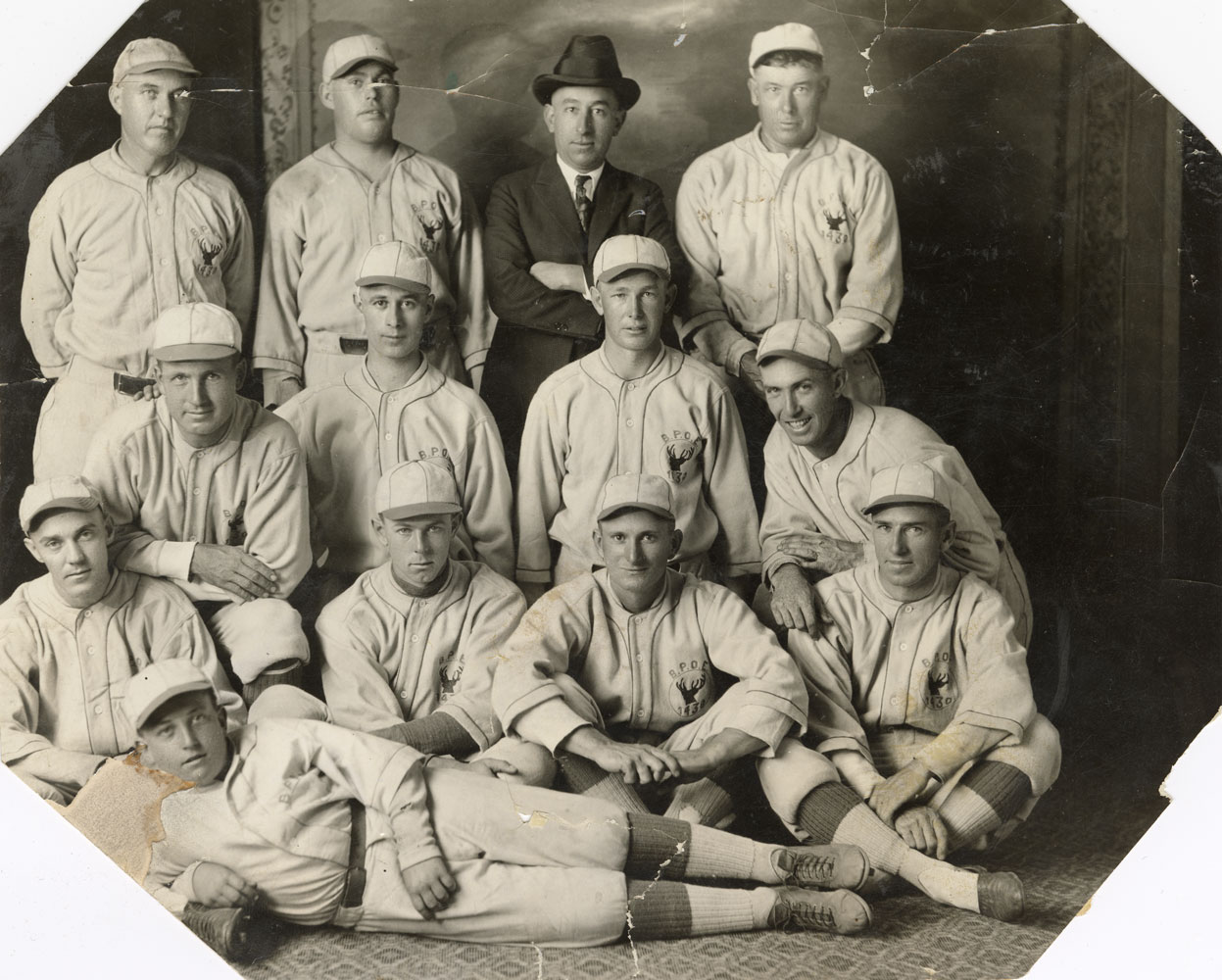
July Fourth was the quietest day of the festival, as most events began in the afternoon after morning church services. Concessions opened at noon, and the Idaho’s Band presented a sacred concert at the Plaza at Chestnut and Santa Clara Streets. Later that afternoon, the battleship baseball team played the Ventura Elks at Seaside Park. Evening concerts once again filled California Street with music, and the day ended in celebration beneath the glow of the anchored battleship.
Ventura’s Biggest Traffic Jam
Monday proved the high point of the three-day observance. At eight o’clock in the morning the Idaho “dressed ship,” with her signal flags flying in a brilliant array.
The Ventura County Star reported that the town experienced the largest traffic jam in its history when an estimated 50,000 people from across Southern California poured into Ventura for Monday’s big parade. Despite the heavy congestion, the paper noted there were no traffic accidents and credited the “skillful traffic control” of Undersheriff Harle Walker, Jr., and Captain Murphy of the state mounted police. Parking was scarce. The American Legion’s lot quickly filled, and every street within walking distance of the parade route was lined with parked cars. The massive parade featured about ninety entries, including floats and decorated automobiles from five Ventura County towns, Ventura, Oxnard, Santa Paula, Fillmore, and Piru, along with marching groups, bands, service clubs, fraternal organizations, scouts, and local businesses.
At 10 a.m., led by the city and county motorcycle officers, the mile-long parade stepped off from Olive and Main Streets, proceeding east along Main to Chestnut, south on Chestnut to Meta, and east on Meta to Fir Street. There, at the eastern end of Plaza Park, the procession ended in time for the patriotic program beginning at 11:30 a.m. The Morning Free Press estimated “fully 10,000 persons were on the streets and thronged in the vicinity of the Plaza.”
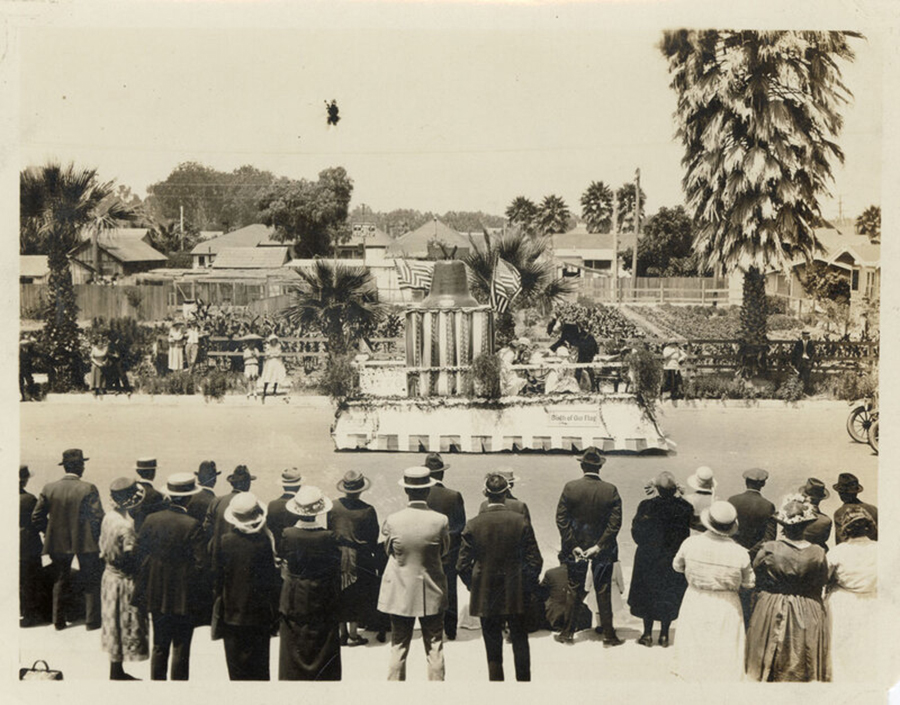
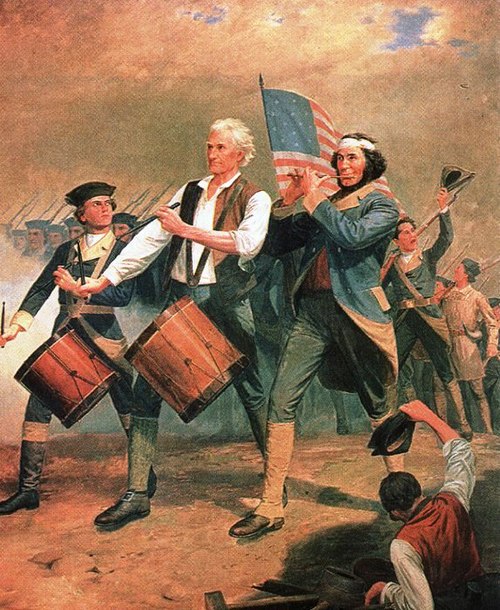
After the motorcycle officers cleared the way, the band from the USS Idaho, led by Bandmaster Charles Douglas, stepped into view. Behind them marched the marines and sailors from the battleship. From there, the pageantry grew more elaborate. A judge’s favorite noted by The Ventura Weekly Post and Democrat was the Pacific Southwest Bank float for its striking recreation of the well-known patriotic scene from the painting, “Spirit of ’76.” Another highlight was the Ventura Elks lodge float featuring a stately elk surrounded by greenery and flowers, while an orchestra, cleverly hidden in the shrubbery, played as the float rolled along.
The Morning Free Press wrote that Burt Munger of Santa Paula viewed the parade from the steps of the Mission, repeating what he had done 50 years earlier. The Ventura County Star claimed that Mrs. Warren C. Kennedy, a guest at the Hotel Ventura, was one of the few who rode both the Monday parade and centennial parade in 1876.
The American Legion float offered one of the most moving scenes of the day: “In Flanders Fields,” depicting a grave, marked by the little white cross which identifies the last resting place of America’s WWI dead, and at its foot, the figure of the grief-stricken mother kneeling, paying homage to her martyred son.
Veterans of the 1898 Spanish-American War marched in the parade, and a car carried members of the Grand Army of the Republic which by 1926 functioned primarily as a fraternal organization for aging Union Civil War veterans.
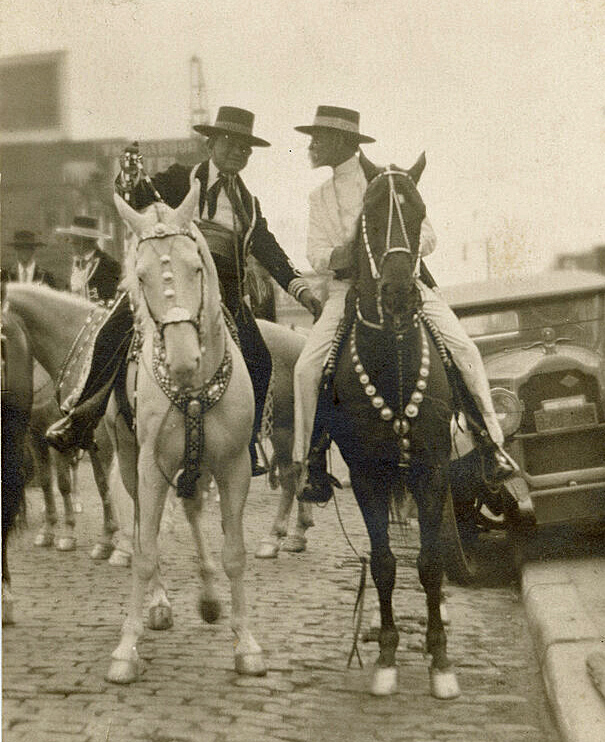
Neighboring towns added their own color. Oxnard sent a tractor pulling a cannon and a 34-piece Elks band. Oxnard’s entry was led by what had become a local parade tradition, Abe Hobson, Adolfo Camarillo, Fred Noble, and Charles Donlon mounted on beautiful horses. Fraternal groups and service clubs from Oxnard and Santa Paula entered floats and marching units. The Odd Fellows of Oxnard decorated its float with a “dazzling display of dahlias in every color.” The group’s female auxiliary rode in flower-trimmed touring cars. Fillmore sent a band. A Mexican fraternal order presented a mission-era scene, followed by its members marching behind.
The Lions Club promoted its sponsorship of the Girl Scouts, followed by uniformed Scout troops. The Post and Democrat noted the Boy Scout council received special mention as the organization making the best appearance in the parade. Camp Fire Girls from Saticoy marched as well as 50 members of the Ventura Christian Church “99 Class,” a men’s Bible study and service group.
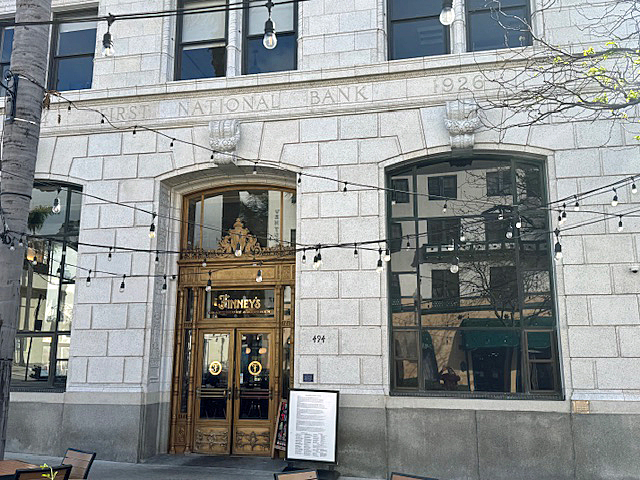
The new First National Bank building, which had opened at the corner of Main and California Streets earlier in the year, appeared in the parade in miniature. The four-story structure featured the first elevator in Ventura County. The bank was on the bottom floor, and the top floors were offices. The most famous officeholder was Erle Stanley Gardner, novelist of the Perry Mason mystery books.
Commercial entries brought a light spirit to the parade. Peoples Lumber Company created a playful sand pile where children in bathing suits tossed candy kisses to the crowd. Star Dye Works fashioned a large star from roses and greenery. A tiny car bearing a giant milk bottle advertised Crescent Eskimo Pies. Southern California Gas shot confetti from toy cannons.
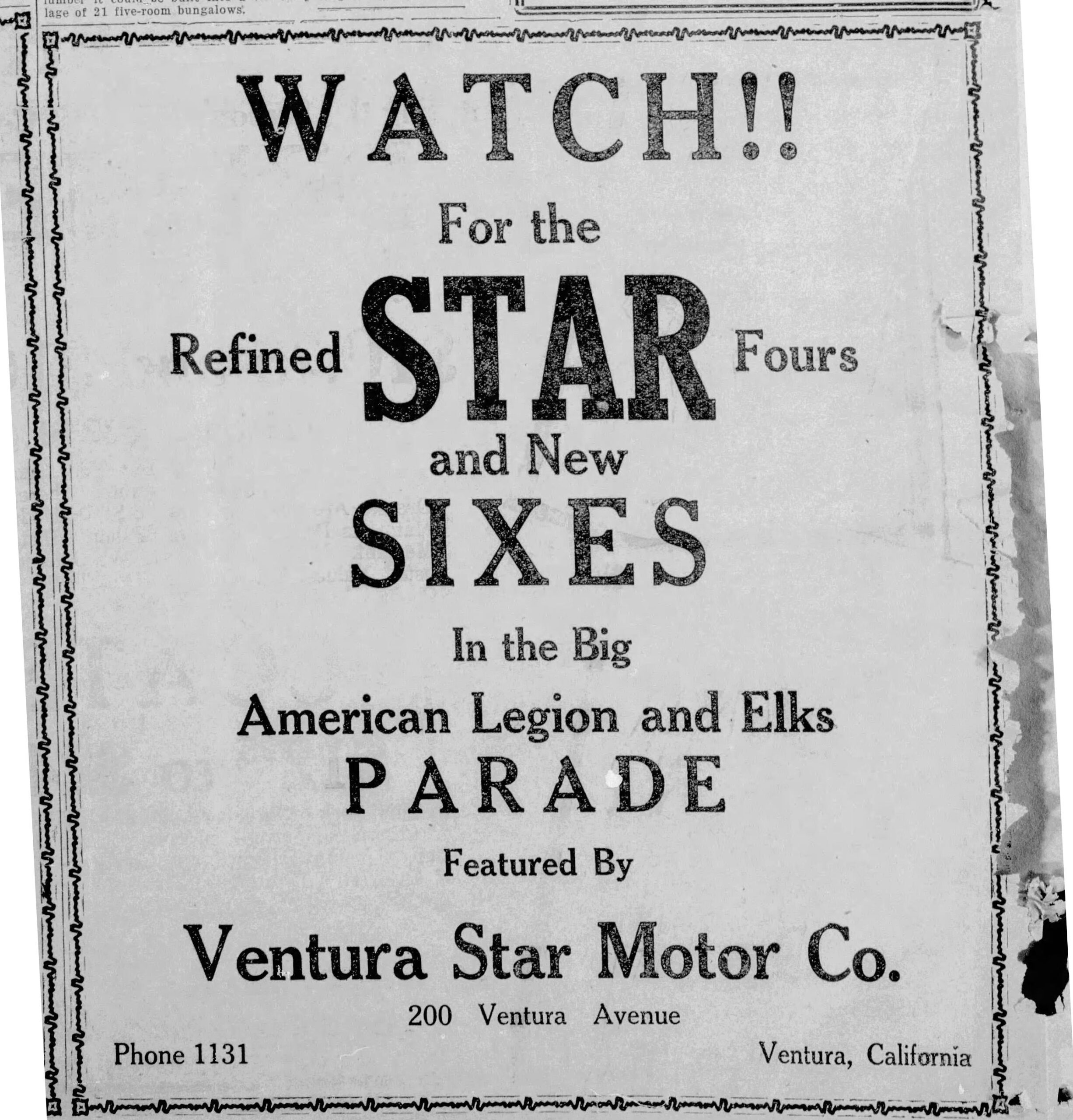
1926 was the height of the automobile parade era. Hotels, clubs, and civic groups decorated dozens of cars in red, white, and blue crêpe paper and flowers. J. L. Rawding, the Ventura County distributor for Oldsmobile and Peerless motor cars, carried Oxnard’s city trustees in a Peerless and the officers of the Oxnard Elks Lodge in an Oldsmobile. Studebakers, Cadillacs, Hudsons, a Stutz coupe and sedan, and even a pair of stylish Hupmobiles joined the procession. Ventura’s Star agency entered two cars decorated in red, white, and blue. Ward Brothers Garage amused spectators with a “tow car” pulling another vehicle behind it. Bringing up the rear were two trick Fords, entered by Philip Van Der Meide and John Perz of Fillmore which, according to The Ventura Weekly Post and Democrat, “caused much merriment among the spectators.” The only throw-back to the 1876 Centennial celebration in the car-heavy parade was the horsedrawn wagons sent by the Dos Pueblos Ranch announcing they were “On Our Way to the Ventura County Fair.”
Patriotic Exercises at the Plaza
At 11:30 a.m., patriotic exercises were held at the Plaza. All the bands in the parade performed “The Star-Spangled Banner” under the direction of the Idaho Bandmaster C. E. Douglas. While the “The Star-Spangled Banner” was written by Francis Scott Key in 1814, it took until 1931 for the song to become the official national anthem, replacing unofficial favorites like “My Country, ‘Tis of Thee”.
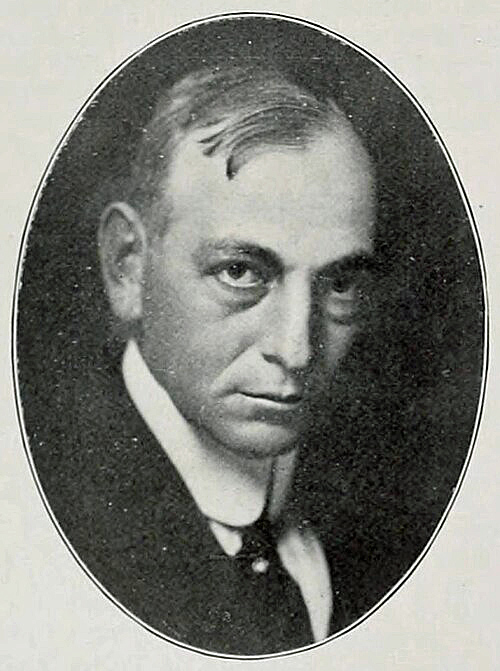
Assistant District Attorney James C. Hollingsworth introduced the speaker of the day, former Ventura County Superior Court Judge Robert M. Clarke, who was running for the U.S. Senate. In his address, Judge Clarke said America was still shaping its identity and future while moving through a complicated world. He said, “Citizenship is only complete when the individual takes and displays an intelligent interest” in what benefits “the community, the state and the nation.”
Events concluded in the Plaza with a prayer by Rev. William E. Patrick, National Chaplain of the American Legion. At noon, the Idaho thundered a 21-gun salute in honor of the nation’s birth.
An Afternoon of Fun and Festivity
The rest of the afternoon and evening was dedicated to dancing, games and fireworks. A “jitney dance” began at 12:30 p.m. and continued until six in the evening. The “jitney” was a popular 1920s social dance format where patrons paid a small fee, typically a nickel or a “jitney” for each individual song, rather than a flat entry fee. This allowed for flexible, affordable dancing where a “rope boy” would clear the floor between songs to collect tickets.
The Boy Scouts displayed their skills in contests on the old ball ground below the Bathhouse, including a nine-and-a-half-foot wall-scaling race, precision first-aid rescues, fire-building contests, and even a “chariot race” with obstacles.
There were concerts by the Oxnard Elks Band and the Santa Paula Mexican Band on California Street. There was another baseball game at Seaside Park pitting the sailors from the Idaho against a team from the Ventura Elks.
At 7:30 p.m., $1,000 ($18,000 today) worth of fireworks were set off from the Ventura Pier, culminating in the lighting of the battleship at 8 o’clock.
The Grand Sesquicentennial Ball
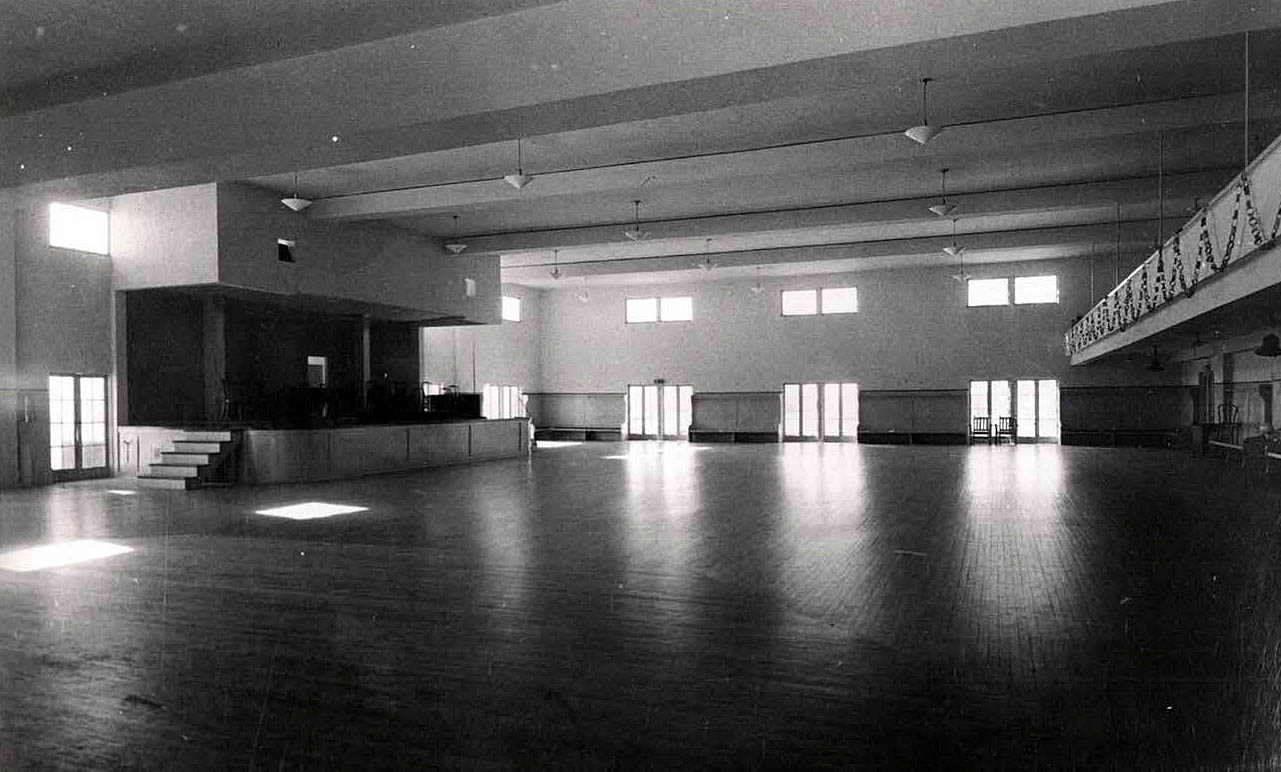
The three-day celebration officially ended with the Grand Sesquicentennial Ball. The Ventura County Star said several hundred couples packed the Bathhouse Auditorium and danced away to “soft strains of Harry Moore’s Rainbow Terrace Orchestra.” Moore was a prominent band leader in Southern California. He specialized in “society dance music” and early ragtime.
The dancing stopped at 10 o’clock long enough for Hollingsworth to present parade trophy cups after which the dancing continued. The first grand sweepstake went to the Pacific Southwest Bank for its “Spirit of ’76” float. The second sweepstakes cup went to the Ventura Elks. Prizes were also awarded for the best marching bands and decorated automobiles.
Celebration Considered a Success
The American Legion and the Ventura Elks said they were pleased with the outcome of the celebration. They pointed to the “immense crowds” gathered at the concessions at the foot of California Street as a sign of its success. According to the Legion, hundreds of people enjoyed speedboat rides around the harbor, and many adventurous visitors even took flights in biplanes. Although the Legion Adjutant admitted that expenses “were great,” he explained that the event was not meant to raise a large profit. He expected only a small surplus after costs were paid. A “small surplus” was a financial victory compared to the national celebration in Philadelphia which by August had lost millions of dollars and would be labeled as “America’s Greatest Flop.”
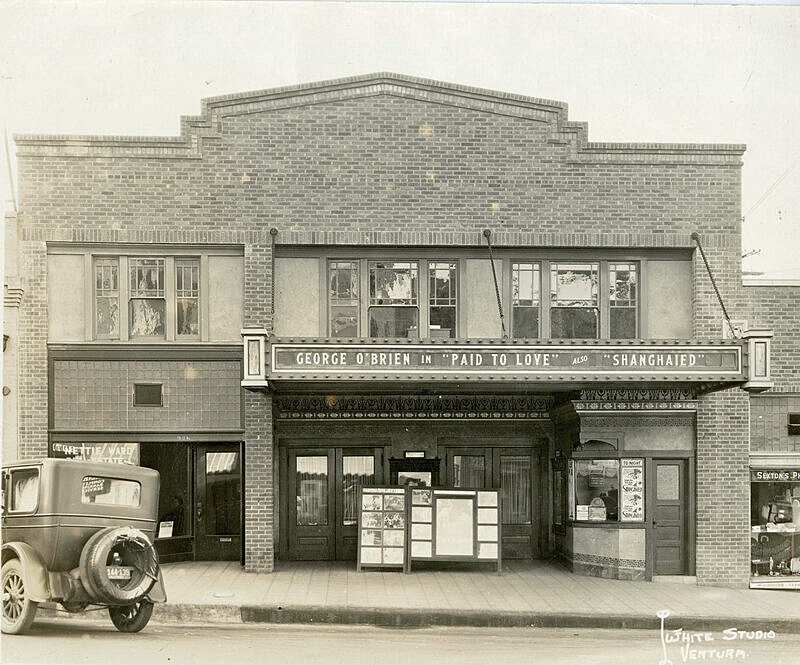
Just days after Ventura’s July 5 parade, local audiences had the chance to see it all again, this time on the big screen. Charles B. Corcoran, manager of the American and Apollo theatres, had arranged to have the parade filmed for exclusive showing in his theaters. Nearly 2,000 feet of film captured the floats, the crowds lining the route, many prominent citizens, and even some of Ventura’s principal buildings. It was the first local newsreel ever taken in Ventura. Corcoran announced that the film would be shown at all performances at the American Theatre on the Saturday after the parade, and at both the American and Apollo theatres on Sunday and Monday. Corcoran promoted the showings to everyone who had marched, ridden on floats, or simply stood along the parade line as their chance to “see themselves in the movies.”
Why 1926 Still Stands Apart
Ventura’s 1926 Sesquicentennial celebration remains one of the most ambitious civic events in Ventura’s history. In 1876, during the nation’s Centennial, Ventura was still a small frontier town with only modest local observances. By 1926, however, the city had grown and was eager to show its progress. Many of the “historic” buildings downtown today were either brand new or proudly highlighted in 1926 as signs of a modern, forward-looking community. By the 1976 Bicentennial, Ventura was larger and more prosperous, but the celebration did not match 1926 in uniqueness. Large civic events were also more common by that time, making it feel less extraordinary. For 2026, Ventura is planning a week-long celebration leading up to the nation’s 250th anniversary. The event is expected to be inclusive and historically reflective, celebrating not only 250 years of the United States, but also the region’s 12,000-year history and specifically honoring the Chumash people.
Make History!
Support The Museum of Ventura County!
Membership
Join the Museum and you, your family, and guests will enjoy all the special benefits that make being a member of the Museum of Ventura County so worthwhile.
Support
Your donation will help support our online initiatives, keep exhibitions open and evolving, protect collections, and support education programs.
Bibliography
- “Adaptive Reuse Along Ventura’s Downtown Main Street.” San Buenaventura Conservancy. Accessed February 22, 2026. https://sbconservancy.org/adaptive-reuse%2Flandmarks.
- “”America’s Greatest Flop”: Why the Sesquicentennial of 1926 Fell Flat.” The Michael Medved Show. Last modified July 10, 2025. https://michaelmedved.com/column/americas-greatest-flop/#:~:text=The%20location%20of%20the%20new,siting%20of%20the%20new%20venture.
- “Bud Houser.” Wikipedia, the Free Encyclopedia. Last modified December 17, 2025. https://en.wikipedia.org/wiki/Bud_Houser.
- Moorpark Enterprise. “Around the Village.” July 8, 1926, 4.
- Morning Free Press (Ventura). “Apricot Show To Have Float.” July 1, 1926, 1.
- Morning Free Press (Ventura). “Fillmore Sends Idaho Greetings.” July 1, 1926, 6.
- Morning Free Press (Ventura). “Girl Scouts Will Inspect The Idaho.” June 19, 1926, 1.
- Morning Free Press (Ventura). “Invite Idaho’s Men To Ninety And Nine.” July 1, 1926, 6.
- Morning Free Press (Ventura). “Local Notes.” July 6, 1926, 6.
- Morning Free Press (Ventura). “Main Street Is To Be Blocked.” July 3, 1926, 1.
- Morning Free Press (Ventura). “Mammoth Parade Is On Monday Morning.” July 1, 1926, 1.
- Morning Free Press (Ventura). “Meet Of Fourth Group Tonight.” July 7, 1926, 1.
- Morning Free Press (Ventura). “Meet Tonight on Fourth Plans.” June 21, 1926, 1.
- Morning Free Press (Ventura). “Parade Pictures Here Saturday.” July 8, 1926, 1.
- Morning Free Press (Ventura). “Three Days Of Celebration Are Ended.” July 6, 1926, 1.
- Morning Free Press (Ventura). “Parade Movies Previewed Here.” July 10, 1926, 1.
- Oxnard Press-Courier. “Bud Will Not Have To Make Airplane Trip.” June 30, 1926, 1.
- Oxnard Press-Courier. “Flag Day Observed in U. S. Today.” June 14, 1926, 1.
- Oxnard Press-Courier. “Oxnard Is Well Represented In 4th Celebration.” July 6, 1926, 1.
- Oxnard Press-Courier. “Oxnard and Vicinity.” July 7, 1926, 3.
- Oxnard Press-Courier. “Special Low Rates East.” June 15, 1926, 1.
- Oxnard Press-Courier. “The Big Fair.” June 9, 1926, 2.
- Oxnard Press-Courier. “Ventura Starts Its Three-Day Festival For Fourth of July.” July 3, 1926, 1.
- “Robert M. Clarke, Class of 1897.” Santa Paula Times. Accessed February 22, 2026. https://m.santapaulatimes.com/news/archivestory.php/aid/3322/Robert_M._Clarke,_Class_of_1897.html#:~:text=After%20seven%20years%20of%20practice,35%20years%20at%20the%20bar.
- “Sesquicentennial International Exposition (1926).” Encyclopedia of Greater Philadelphia. Last modified April 23, 2022. https://philadelphiaencyclopedia.org/essays/sesquicentennial-international-exposition/.
- Simi Valley Star. “Complete Program for American Legion-Elks’ Big Sesqui-Centennial Celebration.” July 1, 1926, 1.
- Simi Valley Star. “Moorpark’s Parade Float Was Attractive.” July 8, 1926, 1.
- Simi Valley Star. “Super-Dreadnaught of American Fleet Anchored at Ventura for 4th of July.” July 1, 1926, 1.
- “Star – UK and USA.” Historic Vehicles. Accessed February 22, 2026. https://historicvehicles.com.au/historic-car-brands/star-uk-and-usa/#:~:text=Parts%20and%20manufacturing%20rights%20of,Company%20between%201922%20and%201928.
- Ventura County Fire Department – Committed to Excellence…Delivered with Pride. Accessed February 22, 2026. https://fire.venturacounty.gov/wp-content/uploads/2020/02/station-42-history.pdf.
- Ventura County Star8. “Estimate 50,000 In Crowd Here.” July 6, 1926.
- Ventura County Star. “Boy Scouts To Do Stunts Here.” June 14, 1926, 6.
- Ventura County Star. “Many Dance During Legion Grand Ball.” July 6, 1926, 6.
- Ventura County Star. “Rawding to Have Machines in Parade.” July 3, 1926, 5.
- Ventura County Star. “Streets Must Be Kept Clean, Warns Mosher.” July 3, 1926, 1.
- Ventura County Star. “Think 50,000 Were In Town.” July 6, 1926, 1.
- Ventura County Star. “Three Days’ Celebration Opening; Mile-Long Parade To Move At 10 On Monday.” July 3, 1926, 1.
- Ventura County Star. “Town Talk.” July 7, 1926, 8.
- Ventura County Star. “Ventura All Set to Celebrate United States’ 150th Birthday.” July 3, 1926, 1.
- Ventura County Star. “‘Mayor’ of Moorpark Ira G. Tanner to Retire in Fall After 30 Years.” July 4, 1953, 3.
- The Ventura Weekly Post and Democrat. “County Unites In Big Fourth Parade.” July 9, 1926, 3.
- The Ventura Weekly Post and Democrat. “Fireworks Must Be Fired On 4th.” June 25, 1926, 2.
- The Ventura Weekly Post and Democrat. “Speak of Day Here on 4th.” July 3, 1926, 1.
- The Ventura Weekly Post and Democrat. “Venturans Attend Formal Dance On Board Battleship.” July 3, 1926, 1.